Despite Mariano Fortuny holding the 1909 patent for the Delphos gown's revolutionary pleating process and its machine, he openly acknowledged Henriette Nigrin as the true inventor of the system. The Delphos gown's precise origins established a nuanced, often debated legacy, marking it as a triumph of textile artistry and sartorial innovation. Its history, even in 2026, continues to invite scholarly inquiry into its foundational narrative.
Fortuny's patent for the Delphos gown's pleating system, while simultaneously attributing its invention to Henriette Nigrin, reveals a persistent historical pattern: legal proprietorship often diverges from public recognition. The tension between legal proprietorship and public recognition frequently obscures the true origins of groundbreaking techniques, prioritizing commercial branding over individual ingenuity.
Mariano Fortuny patented the pleating process and the machine he invented in 1909, according to the National Museum of American History. Concomitantly, he acknowledged Henriette Nigrin as the inventor of the dress's pleating system, which was patented in the same year, as documented by Victoria and Albert Museum Collections. The juxtaposition of Fortuny's patent and Nigrin's acknowledgment reveals a complex historical trajectory where formal intellectual property ownership did not invariably align with the acknowledged fount of innovation. The simultaneous patenting of the pleating process by Fortuny and his public acknowledgment of Nigrin as its inventor suggests a deliberate legal strategy to secure intellectual property, while simultaneously cultivating a narrative that underscored Nigrin's creative genius, rather than simply representing a passive oversight.
The Enduring Legacy of the Delphos Gown
Mariano Fortuny copyrighted the design of the Delphos dress in 1909, formally inscribing its singular aesthetic within his commercial purview. These exquisite 'Delphos' dresses commenced production in Venice, Italy, as early as 1907, continuing well into the twentieth century. The Delphos gown, a consummate expression of Venetian craftsmanship and textile innovation, swiftly ascended to the status of a distinctive and enduring fashion icon. Its initial production predated Fortuny's securing of the patent and copyright for its revolutionary pleating system and design by at least two years, indicating either a period of initial vulnerability or a belated recognition of the imperative for formal intellectual property protection.
Unraveling the Pleating Process
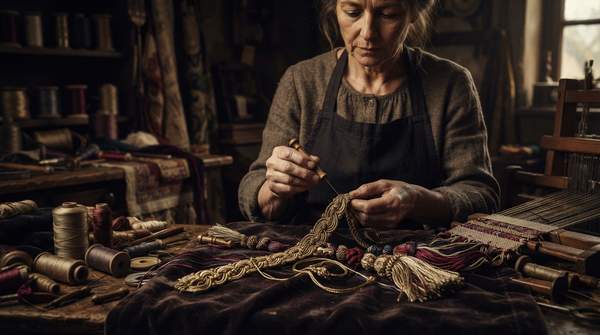
The meticulous procedure for imbuing the Delphos gown with its characteristic pleats involved the precise winding of fabric onto a PVC pipe, measuring at least 20 cm in diameter, subsequently securing it with crochet yarn at intervals of 8-10 mm, as detailed by Needleworking History. This intricate technique yielded the gown's tightly pleated silks, characterized by pleat depths ranging from 2-6mm. The highly detailed, ostensibly manual nature of the pleating process—encompassing specific winding methodologies and precise pleat counts of 430-450 per panel—suggests that Fortuny's patented 'machine' likely served to standardize or facilitate a fundamentally labor-intensive craft. Nigrin's 'system' for achieving these pleats was the true, foundational innovation, rather than the mechanical apparatus itself. The meticulous and labor-intensive method of pleating was, therefore, paramount in forging the gown's signature fine, permanent folds, a testament to haute couture's demanding processes.
Challenges in Crafting the Delphos
The creation of the Delphos gown necessitated the selection of specific, delicate materials, notably utilizing a silk habotai fabric weighing 6 momme. Furthermore, the refinement of the pleating technique itself was the culmination of extensive experimental trials involving the nuanced pleating and undulating of silk fabric, as comprehensively documented in Tandfonline. Achieving the Delphos gown's distinctive fluid drape and the permanence of its pleats demanded not only a particular, gossamer fabric but also substantial empirical experimentation to attain perfection. The fabrication of the Delphos gown revealed profound technical challenges, demanding mastery of textile manipulation far beyond mere conceptual design.
Key Design Elements for Lasting Appeal
Mariano Fortuny formally patented his innovative method of pleating in 1909, christening it ‘Genre d’ étoffe plissée-ondulée’, as chronicled by Fortuny. A further ingenious design element involved weighting the Delphos dresses with small Murano glass beads, artfully integrated into the seams to ensure their characteristic flowing drape and stability. Fortuny's formal nomenclature for the pleating methodology, alongside the sagacious application of these subtle weights, proved critical both to the gown's distinctive identity and its characteristic flowing silhouette. The meticulously considered elements of Fortuny's formal nomenclature and the sagacious application of subtle weights collectively contributed to the gown's enduring aesthetic resonance and its esteemed position as a masterpiece of early 20th-century fashion design.
Understanding the Delphos Construction
What is the Delphos gown?
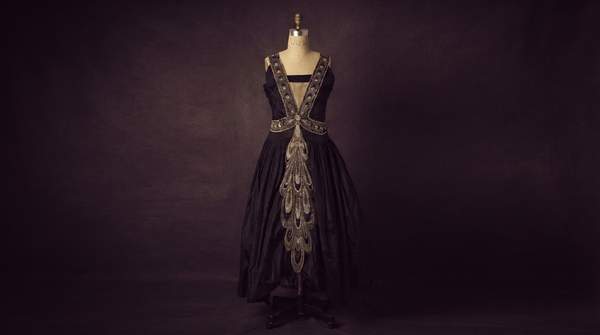
The Delphos gown is a column-like dress, celebrated for its finely pleated silk and a timeless, flowing silhouette designed to be worn without the constrictions of corsetry. Its construction afforded the wearer remarkable freedom of movement, presenting a radical departure from the structured fashions prevalent in the early 20th century. The Delphos gown's design drew profound inspiration from ancient Greek statuary, emphasizing the natural form and grace of the body. The embrace of natural form, a stark contrast to the era's corsetry, implicitly challenged prevailing societal norms regarding female attire and bodily expression.
Who invented the Delphos gown?
Mariano Fortuny secured the 1909 patent for the Delphos gown's pleating system and its machine, yet he consistently credited Henriette Nigrin as the true inventor of the system. The dual attribution of the Delphos gown highlights a complex historical scenario where legal ownership did not fully align with the acknowledged creative origination.
The Art of the Pleat: A Concluding Detail
Each individual panel of the Delphos dress contains an astonishing between 430-450 pleats, according to the ASU FIDM Museum. The prodigious number of pleats per panel reveals the extraordinary precision and considerable artisanal labor required to fabricate each Delphos gown. The intricate manual work, synergized with the innovative techniques pioneered by Henriette Nigrin and subsequently commercialized by Mariano Fortuny, irrevocably cemented the garment's stature as a singular achievement in textile art. The Delphos gown's enduring presence will likely continue to challenge conventional interpretations of invention and attribution, shaping future discourse on collaborative genius in fashion history.