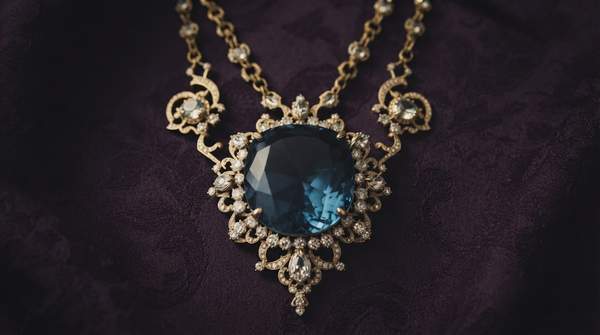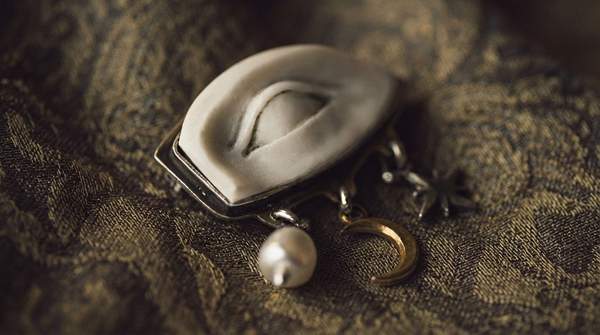
The brooch began as a humble solution to a winter problem: a simple pin with a circular ring, hammered in the Bronze Age to hold a cloak closed. By the mid-twentieth century, it had become a jewel of platinum, diamonds, and carved gems — an object whose only job was to be looked at. Between those two points lies a story of changing technology, shifting social codes, and the slow transformation of a fastener into a canvas. Tracing that path, era by era, is the surest way to recognize what any given brooch is, and when its design language was born.
The Brooch's Ancient Origins: From Fastener to Early Adornment
The earliest brooches, as Sarah DiMarco reports for Veranda, took form in the European Bronze Age around 1400–1100 B.C. as unassuming pins with circular rings, used to secure and fasten cloaks and other garments during the winter. A spiral brooch from that period survives as evidence of the form's antiquity. Function came first; ornament was incidental.
That balance began to shift in the Iron Age. Cynthia Trope, associate curator of product design and decorative arts at Cooper Hewitt, Smithsonian Design Museum, notes that as craftsmen sharpened their skills and iron became more readily available, brooches took on more elaborate forms with spiraling details and a disk-like appearance. "With brooches created in the Iron Age, you'd still have that sense of function, but you'd also have a very ornamental sense," she explains, describing bold pieces that integrated abstract, geometric forms with slight references to the natural world. The brooch had already begun its long migration from utility toward expression.
Medieval and Renaissance Brooches: Status, Faith, and Practicality
In the medieval period, the brooch returned to practical duty. According to the Antique Jewelry University, the common form was the ring brooch — a ring with a pin across the center — held in place by the fabric captured by the pin. It secured layers of dress and held small items, a role it retained until buttons became prevalent around the fourteenth century.
Yet even this workaday object carried meaning. Social significance could be signaled subtly or blatantly through brooch design, and messages of love, affection, and friendship were expressed outwardly or concealed on the reverse — inscriptions such as sans departir (without parting) and vous et nul autre (you and no other) were popular, and the circular form was sometimes replaced by a heart shape to reinforce the sentiment. Symbols of faith rendered in three dimensions and en ronde bosse enamel were popular among the religious, some brooches even enclosing holy relics. The medieval brooch was simultaneously clasp, love token, and devotional object.