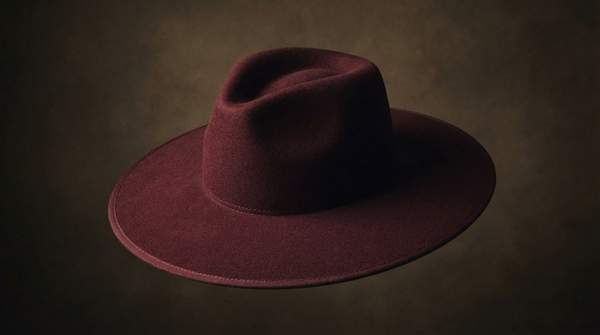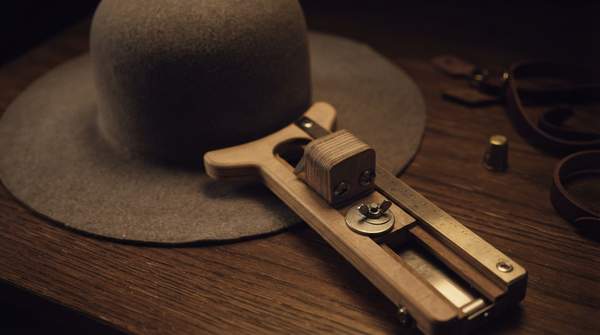
A bespoke hat begins not with felt but with the wearer's own head. Traditional millinery—the craft of building a hat from the ground up rather than decorating a pre-made one—turns on a sequence of precise, hands-on stages: mapping the exact shape of the client's head, preparing and steaming the material, hand-blocking the crown and brim against a form, and finishing with wiring, stamping, and individually crafted trims. The result, in the words of one custom hat maker, is a piece "designed to fit you and built to last a lifetime," and it is precisely this slow, deliberate labor that separates true millinery from the faster, more accessible routes of hat bars and mass production.
Precision Fit: Measurement and Head Mapping
The defining premise of bespoke work is that no two heads are alike, and the fitting process reflects that conviction. Weather Hat Co., which documents its custom process in detail, describes a fitting that is designed "to map the exact shape of your head, not just measure around it." The first stage is a precision sweatband measurement: the maker measures the inside circumference where the sweatband will sit, taken carefully—down to an eighth of an inch—to ensure comfort, stability, and long-term wear. As the maker puts it, this is not about being "close enough"; it is about getting it right.
Measurement alone, however, cannot capture the asymmetries and contours that determine how a hat actually sits. The second stage is head shape mapping, in which the outline of the client's head is traced and recorded using a firm architect's ruler. This traced profile becomes a reference that follows the hat through the rest of its making, allowing the maker to compensate for the particular slopes and planes of one individual's head rather than averaging toward a standard size. It is the difference between a hat that merely measures correctly and one that genuinely belongs to its wearer.
Material selection sits alongside fitting as an early decision. Couture milliners such as Guy Carsone Fine Millinery describe working with vintage materials that "bring history to life," alongside modern touches that keep designs current—a pairing the studio presents as part of the appeal of handmade work over factory output. In traditional felt hat making, the chosen body—typically a felted fur or wool hood—is prepared for shaping, its character already influencing how it will respond to steam and pressure in the stages that follow.
Blocking and Shaping: Crafting the Form
Once the head is mapped and the felt chosen, the hat takes physical form through blocking and shaping. This is the stage where the material is worked—traditionally over a wooden block or form, with steam softening the felt so it can be stretched and pressed into the chosen crown and brim lines. The custom maker's account describes the process in tactile terms: using steam, hand tools, and years of experience, the hatter shapes the crown to the chosen style, "adjusting lines, depth, and transitions by feel as much as by sight."
That phrase carries the essential distinction of the craft. Machine production can reproduce a shape, but it cannot respond to the material in front of it or to the individual head it is being built for. As the maker describes, no two heads—or hats—are exactly alike, and this shaping stage allows subtle refinements that machines simply cannot replicate. The work is deliberate and time-consuming, and that investment is what gives each hat what the maker calls its "personality and balance—long before the brim ever meets the wearer's face."
Finishing follows shaping, and it is where the hat becomes a finished object rather than a shaped blank. The documented process includes embossing and stamping the sweatband using traditional methods, including gold leaf inlay—a small detail, as the maker notes, but one that connects the hat to generations of craft before it. Couture practice adds its own vocabulary of finishing: milliners describe wiring, stitching, and embellishment as core techniques, with trims individually crafted and, in some ateliers, materials dyed in-house. The client relationship is collaborative throughout, with the design refined in conversation rather than selected from a rack.