A patina finish on luxury shoes is a handcrafted coloring process in which an artisan builds color on leather through successive layers of dyes and pigments, producing depth, nuance, and character that no industrial, uniform application can replicate. Where a factory-dyed shoe leaves the line with a single flat tone, a patinated shoe is worked by hand so that light reveals shifting tones and the shoe's contours gain dimension. Understanding what the technique involves—and how it differs from glazing and ordinary polishing—explains both why these shoes command a premium and how to recognize the genuine article.
What is a Hand-Patina Finish?
The shoemaker Altan Bottier defines patina as "the art of working the color of the leather to give it depth, nuance, and character," created by hand through successive layers of dyes and pigments rather than applied as a uniform industrial color. The firm describes the result as a transformation of natural leather into a living material, one whose color develops beautifully over time. Patinated shoes, the house notes, now hold a central place in the world of luxury footwear.
Roberto Revilla, the bespoke shoemaker behind Roberto Revilla London, traces the finish's association with luxury and bespoke fashion as a tradition that continues to thrive in modern men's footwear design. Crucially, a patina is not a single product applied once: it is an aesthetic modification of the leather's surface that can occur naturally over time or be created deliberately, as the retailer In Corio explains, through the use of dyes, creams, and polishes. The hand-patina finish is the deliberate, artisanal version of that transformation.
The Artisanal Process: Crafting a Patina
According to Revilla, creating a patina finish is an art form that begins with selecting high-quality leather, followed by meticulous hand-dyeing. Skilled artisans use various techniques—sponge painting, brushing, and layering—to achieve the desired effect, a process he says demonstrates a commitment to traditional craftsmanship as much as it adds aesthetic value.
Altan Bottier's account of the work fills in the sequence. The color is built gradually: dye is applied in thin layers, worked in circular motions, and each layer is allowed to dry before the next is laid down. Depth and shadow are then created deliberately—the toe and heel are intensified, the edges darkened for a shaded effect, and the center kept lighter for a more luminous result. The number of layers depends on the finish the artisan wants to achieve. In Corio describes the same logic from the preparation side: strip the leather, apply a base tint, then play with layers of color to create nuances, finishing with a nourishing cream and shoe polish.
One named variant of this craft is the Anticatura technique, described by the retailer August Apparel as a hand-patina method in which dyes and waxes are applied to unfinished crust leather, using techniques such as rubbing, buffing, and burnishing to produce an aged, vintage appearance. Anticatura is one of several methods used to achieve a patina finish rather than a synonym for the entire discipline.
Comparing Leather Finishing Techniques
Patina, glazing, and polishing are frequently confused because all three involve waxes, creams, and elbow grease—but their purposes diverge sharply. Isolating each technique's goal, materials, and result, as In Corio and the other artisan accounts describe them, shows three distinct processes: patination transforms color; glazing builds shine; polishing maintains and protects.
| Technique | Primary Purpose | Materials Used | Visual Outcome |
|---|---|---|---|
| Patina | Transform the color, creating a personalized visual effect with depth, nuance, and character | Successive layers of dyes and pigments, with creams and polishes | Non-uniform color with shaded, luminous depth that develops over time |
| Glazing | Obtain a mirror-like shine on the surface | Successive layers of shoe polish emulsified with a little water | A highly reflective, brilliant surface |
| Shoe polishing | Maintain and protect the leather, restoring its shine | Shoe polish, creams, and brushes | A restored shine on the existing color |
The distinction matters in practice. Polishing is routine care: it preserves and protects what is already there. Glazing, as In Corio defines it, superimposes successive layers of polish emulsified with water to push the surface toward a mirror-like shine—Altan Bottier notes that a successful mirror shine can enhance the depth of an existing patina and lend the shoe a more refined, formal finish. Patination is the only one of the three that changes the color itself, which is why it belongs to the making of the shoe rather than its upkeep.
Aesthetic Value and Markers of Quality
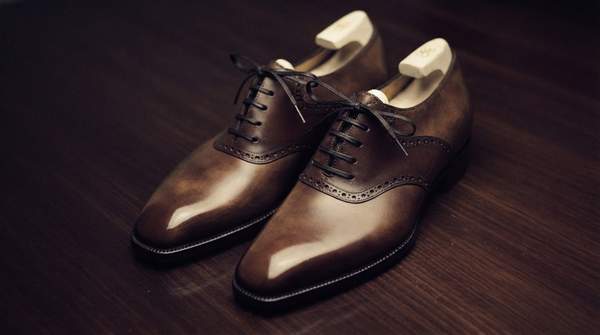
What separates a fine patina from a merely colored shoe is the complexity of the surface. Altan Bottier's description supplies the markers: depth, nuance, and character, with light revealing shifting tones across the shoe and its contours gaining dimension. A quality patina is built in deliberate layers, with darker edges and intensified toe and heel set against a lighter, more luminous center—an intentional play of shadow rather than an accident of application.
The value is qualitative as much as visual. Revilla frames patina shoes as embodying elegance, sophistication, and personal style—more than just footwear, in his words, a statement. Eduardo Xavier of Bespoke Lifestyle Consulting, whose perspective emphasizes the finish's qualitative worth, similarly points to the individuality of the result: because the color is worked by hand, each patinated pair carries its own shaded transitions rather than a repeatable factory tone. The hand-worked, non-uniform character is precisely what distinguishes these shoes from industrially colored footwear.
Identifying Genuine Hand-Patina Footwear
Readers can confidently identify luxury footwear featuring genuine hand-patina finishes by observing specific aesthetic characteristics. The measurable indicator is the presence of nuanced, non-uniform color transitions, visible depth, and unique shaded effects, rather than a flat or industrially uniform finish. Examine the shoe under direct light and across its contours: a true patina will show darker edges, intensified toe and heel, a lighter center, and tones that shift as the light moves. A shoe whose color sits flat and identical across every panel was sprayed, not worked—and that difference, visible on the leather itself, is the whole distinction.