Three signature styles anchor the visual history of 20th-century fashion illustration: Charles Dana Gibson's idealized American femininity, J.C. Leyendecker's sleek masculine elegance, and René Gruau's bold, painterly graphics for post-war haute couture. Each artist did more than record the clothing of his era; his distinctive visual language helped define what readers of the period understood fashion to be. For historians and collectors, learning to read these signatures is the essential first step in attributing and contextualizing surviving works.
The Enduring Legacy of Fashion Illustration
Fashion illustration is nearly as old as fashion design itself, and its practitioners have always worked with distinct, recognizable styles—exaggerated poses, effortless strokes of color—that inspired successive generations of artists, as the account compiled by Just Looking Gallery observes. The medium's fortunes rose with printing technology: the 1930s became a "golden age" of fashion illustration once new reproduction methods made it easy to place drawings directly onto magazine pages. Before photography dominated editorial pages, the illustrator was the primary interpreter of couture, translating a designer's intentions into an image that could circulate widely and shape public taste. The three figures examined here each dominated a different register of that system: the social ideal, the advertising icon, and the couture house image.
Charles Dana Gibson and the Idealized 'Gibson Girl'
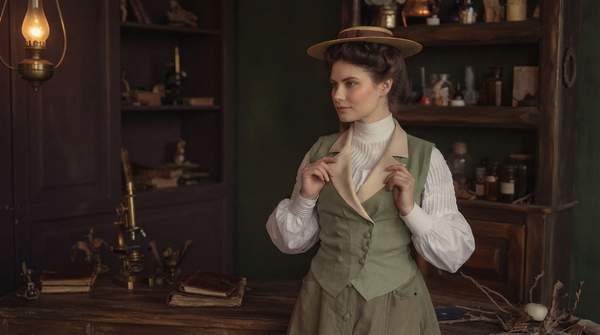
Working in the early 20th century, Gibson was, in the gallery's assessment, the most influential figure in the development of the American feminine style, defining his decade of fashion illustration through the "Gibson Girls." The significance of this figure lies in its double character: it was a fashion image, but also a widely embraced ideal of American womanhood. The Henry Ford's account of the period notes that the Gibson Girl "defined femininity at the end of the previous century," a formulation that captures how an illustration could become a cultural benchmark rather than a mere garment record. For the collector, Gibson's work is identifiable less by any single technique than by this aspirational typology—the poised, idealized woman as the visual shorthand for an era's self-image.