Haute couture show invitations have evolved from simple entry passes into deliberate narrative instruments: objects and, increasingly, experiences that tell editors and buyers how a designer is thinking before a single look walks the runway. The physical invite's role as a "statement of intent" is documented across four decades of fashion ephemera, and its core function—priming an audience for a collection's tone—now carries over into digital and hybrid formats, where the goal shifts from delivering an artifact to transmitting a sensation.
The Invitation as a Statement of Intent
The clearest articulation of the invitation's purpose comes from Iain R. Webb, the fashion correspondent behind Invitation Strictly Personal, a 2014 volume assembling 300 fashion show invitations spanning four decades. In his framing, "the fashion show invitation is a statement of intent, providing the first inkling for fashion editors and buyers of how a designer is thinking that particular season."
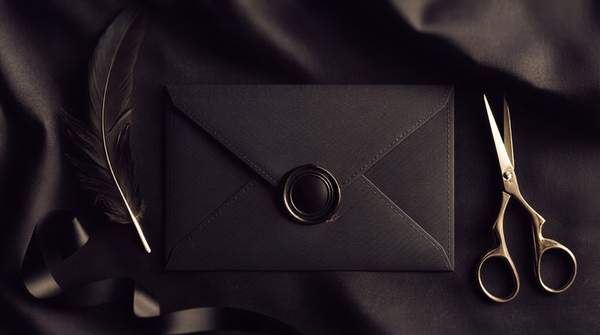
That definition reframes what might look like stationery. Writing on design site Collater.al, contributors describe invites as "visual and tactile clues that anticipate the tone of the show"—sometimes provocative, ironic, or mysterious—and as "a message and a manifesto of intent" in an era when brand experience governs everything. The invitation is not an accessory to the show; it is the show's opening sentence.
Evolution of Physical Invitations: From Pass to Collectible
Webb's collection, drawn largely from his own front-row archive alongside contributions from contemporaries such as Colin McDowell, juxtaposes womenswear and menswear, ready-to-wear and haute couture, across New York, London, Milan, and Paris. Its breadth is itself the argument: over forty years, the invite grew from a functional credential into a collectible design object.
Concrete examples show how far the form traveled. A Mastermind recap of the AW26-27 Paris shows highlights invites including an inflatable lobster claw and tiny chairs—objects that function as souvenirs of a collection as much as keys to the venue. Earlier precedent comes from Rochas: the Fall/Winter 1997-98 invitation, as recounted by Alex Lawrence's review of Webb's book, carried a sketch of a sumptuous gown by designer Peter O'Brien, quotes from Oscar Wilde and Dorothy Parker, and the jeweled heart motif that recurred in the house's couture shows—a complete primer on its old-school Hollywood glamour.