A luxury tea set is never merely a vessel for hot water and leaves. Look closely at any fine example—from an ornate Sèvres porcelain service to a silver Moroccan tray to an unglazed Yixing teapot—and you are reading a culture's priorities in physical form. The French aristocracy of the 18th century commissioned tea ware to display status; Moroccan households built theirs around generosity and shared experience; modern Chinese artisans celebrate a fragile, demanding craft heritage. Comparing these three traditions side by side reveals how completely a social ritual can shape an object's materials, decoration, and meaning.
The Enduring Legacy of Luxury Tea Sets
What makes a tea set "luxury" rather than simply functional? The answer, historically, is that the object had to carry meaning beyond pouring. When tea first arrived in Europe it was an aristocratic indulgence, and the elite demanded utensils equal to the occasion. As one account of French tea culture puts it, the aristocracy "demanded teaware that reflected their status," which produced intricately designed sets in silver and porcelain, frequently adorned with delicate Rococo and Baroque motifs. In Morocco, by contrast, the same drink became what one cultural writer describes as "a treasured ritual, a conversation starter, and a marker of shared experiences and values." The set, in each case, is the ritual made visible.
18th-Century French Aristocracy: Status and Refinement
In France, tea began as a luxury confined to the royal court and the aristocracy, served in elaborate settings at elite gatherings. The teaware that emerged from this milieu was inseparable from its social job: it had to look expensive because its purpose was to signal refinement. Silver and porcelain were the favored materials, and porcelain in particular carried an almost mythical prestige. Coco Whittaker, writing for Mayfair Gallery, notes that porcelain was known as "white gold" in 18th-century Europe, and that King Louis XV set his potters the task of unlocking the secret of hard-paste porcelain "at all costs—whether that meant copying, spying or stealing," after the Meissen factory in Saxony discovered it first.
The French factory that answered this challenge, initially founded at Vincennes under ceramicist Jean-Claude Duplessis and later established at Sèvres, became Europe's artistic leader. Drawing on Jeffrey Munger's account of 18th-century French porcelain, the Sèvres factory flourished through constant innovation: new forms were always in development, sometimes pushing the established boundaries of the material, and new types of decoration appeared constantly, drawing on sources as varied as classical antiquity and Japanese lacquer. By the mid-1750s Sèvres had assumed artistic leadership in Europe from Meissen and continued setting standards for the rest of the century. Its prestige was such that, as the antiques dealer M.S. Rau observes, con artists have been trying to fake Sèvres pieces for centuries.
Traditional Moroccan Hospitality: Ritual and Community
The Moroccan tea set tells a different story—one of welcome rather than display. According to Houssam M., writing for the Moroccan craft seller Marrakeche Crafts, Moroccan tea is "much more than just a drink," functioning as a treasured ritual and a marker of shared values in Moroccan society. The earliest Moroccan tea sets were likely composed of locally sourced and crafted items in clay and metal, with teapots that were simple in design and emphasized functionality over aesthetics.
The set's evolution reflects Morocco's position at a crossroads of trade and influence. European influence appears in the sugar cubes now standard in Moroccan tea, while the Chinese origins of tea and British influence on its distribution shaped the components of the set itself. Over time, the design evolved alongside changing social, economic, and political contexts: sets once typically made of metal or ceramics can now be found in a wide variety of materials and designs. The constant is the ritual of hospitality the set serves—pouring for a guest is itself the point, and the ware's growing ornamentation developed in service of that act of generosity.
Modern Chinese Artisanal: Heritage and Innovation
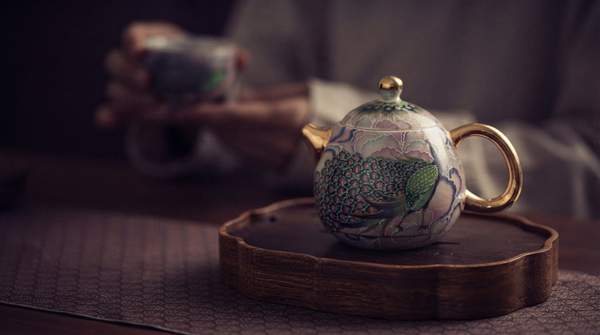
Contemporary Chinese artisanal tea ware represents a third value system, in which the material itself is the luxury. Writing at Teapot Artisan, a specialist retailer describes Yixing-style teapots made from limited, sustainably sourced purple clay, known as zisha, prized for a porous quality that is said to improve tea flavor over time. The craft is extraordinarily demanding: fewer than 30 percent of crafted teapots are reported to survive the firing process, and the required skills are described as attainable only after more than ten years of dedicated practice. The scarcity of the clay and the attrition of firing add to each piece's exclusivity.
Here the social function is connoisseurship—the buyer values the ritual of preparation and the preservation of an endangered craft. The same retailer frames purchases as supporting local artisans and a wider effort to preserve China's intangible cultural heritage. Where the French set projected status outward to a courtly audience and the Moroccan set welcomes a guest, the modern Chinese artisanal teapot speaks most directly to the individual performing the ritual, and to the continuity of a tradition.
Comparative Cultural Framework of Luxury Tea Sets
Setting the three traditions side by side shows how directly social function drives material and craft choices. A French set answers the question "how do I appear?"; a Moroccan set answers "how do I welcome you?"; a modern Chinese artisanal teapot answers "how do I honor this craft?"
| Cultural Tradition | Primary Social Function | Key Materials | Defining Craftsmanship |
|---|---|---|---|
| 18th-Century French (Aristocratic) | Symbol of aristocratic status, refined taste, and opulence at court gatherings | Silver and prized porcelain, valued as "white gold" | Sèvres innovation in form and decoration, drawing on classical antiquity and Japanese lacquer; hand production with closely guarded secrets |
| Traditional Moroccan | Hospitality, generosity, and shared cultural experience | Initially local clay and metal; later a wide variety of materials and designs | Intricate, functional designs that evolved with changing social contexts and foreign influences |
| Modern Chinese (Artisanal) | Connoisseurship of the tea preparation ritual and preservation of craft heritage | Zisha purple clay, porous and increasingly scarce | Highly demanding firing process—fewer than 30 percent of teapots reportedly survive—requiring 10+ years of practice |
The comparison also clarifies what "luxury" means in each context: rarity of material for the French, generosity of gesture for the Moroccans, and mastery of a fragile process for the Chinese artisans.
The Evolution of European Tea Ware: From Import to Art Form
How did an imported leaf transform European craft? The Victoria and Albert Museum traces the mechanism precisely: at the turn of the 18th century, tea in Britain was brewed and served by the lady of the house in the drawing room, and this new, respectable social ritual created a demand for tea wares made to the latest European tastes. Because the leaves themselves were extortionately expensive, they were often stored in lockable caddies, and the beverage was served in small porcelain cups holding only a gulp of tea. Silversmiths across Europe quickly turned their skills to making caddies, canisters, kettles, sugar tongs, and the other accessories deemed necessary to serve the novel brew appropriately.
The pattern is worth noticing, because it repeats across cultures: the ritual arrives first, and the craft rises to meet it. In France, the same dynamic produced the aristocratic demand for status-reflecting teaware that fueled Sèvres's rise. The social occasion—drawing-room ceremony in Britain, courtly display in France—dictated the forms, the materials, and ultimately the artistic ambitions of the makers. Tea ware became a domestic art form precisely because society treated the serving of tea as a performance.
Collecting and Contemporary Craftsmanship
The luxury tea set remains a living tradition rather than a museum piece. Contemporary makers continue to court collectors who, as one retailer describes of its Japanese tableware audience, deeply appreciate the beauty of tradition and craftsmanship in everyday life—tea lovers and collectors seeking pieces that carry cultural stories and artisanal spirit. Some modern pieces arrive in bespoke paulownia boxes with a card sharing the story of their creation, packaging the narrative alongside the object.
Collecting antique sets—Sèvres porcelain chief among them—persists as a parallel practice, though this article deliberately offers no valuations or investment guidance. What the collecting market and the artisanal market share is the conviction that these objects are cultural documents: the faking of Sèvres for centuries, as M.S. Rau notes, is itself backhanded testimony to how much the pieces have been valued. The modern landscape thus extends the same logic that shaped the 18th century—rarity, skill, and story—into new materials and markets.
Appreciating Tea Sets as Cultural Narratives
To fully appreciate luxury tea sets, consider their historical context, the social rituals they supported, and the specific craftsmanship techniques and materials employed, as these elements collectively tell a story of cultural values. The test of understanding is simple and checkable: the reader will be able to articulate how a specific tea set's design—ornate silver, delicate porcelain, or unglazed clay—directly reflects its cultural origin and intended social use. A gilded Sèvres cup speaks the language of Versailles; an engraved Moroccan tray speaks of welcome; a plain zisha teapot speaks of a craftsman's decade of training and a firing kiln's ruthless odds. Hold any fine tea set up to that question, and it will answer.
Sources
- French Tea Sets — Clair Thé
- The Moroccan Tea Set: Cultural History And Significance — Marrakeche Crafts
- Sevres Porcelain: Everything You Need to Know — Mayfair Gallery
- bgc505 / 18th-Century Sèvres Porcelain
- Penchant for Porcelain? Your Complete Guide to Sèvres Porcelain — M.S. Rau
- Which Brands Truly Offer the Best Luxury Tea Set in 2026? — Teapot Artisan
- Teapot design through time — Victoria and Albert Museum