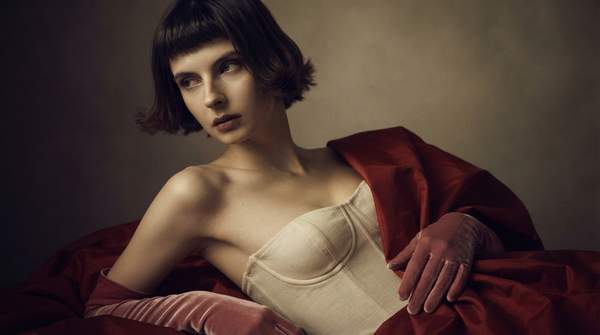
Fashion photography began as little more than a portrait with better fabric, and became the engine that sells haute couture's dreams. The Victoria and Albert Museum traces the profession's roots to Victorian society portraiture, where from the 1840s debutantes, actresses and dancers posed in their finery for portrait photographers just as their mothers had sat for painters. Within a century, that static convention had been overturned repeatedly: by the elegant minimalism of the 1930s studio, by models caught mid-leap on a beach, by surrealism's provocations, and finally by the smartphone. What has never changed is the tension underneath it all—the pull between the dress that must be shown and the art that insists on being made.
From Society Portraits to Editorial Art: The Dawn of Fashion Photography
The earliest fashion magazines were drawn, not photographed. Istituto Marangoni's account of the genre notes that the first fashion magazines of the late 1800s—Harper's Bazaar and Vogue—were illustrated entirely by hand. The decisive rupture came in 1913, when Condé Nast appointed Adolph de Meyer as Vogue's first official photographer. Once the camera entered the magazine, the dress itself changed status: photography, the Marangoni history argues, made the success of emerging couturiers in the 1920s and 1930s, including Chanel, Balenciaga and Schiaparelli, by emphasising their distinctive styles through carefully planned shoots.
David Bailey, quoted by the V&A, once defined the fashion photograph as simply "a portrait of someone wearing a dress"—a reminder of how close the young genre remained to the portrait studio. Yet the same museum account observes that his own work demonstrates the transformative power of the camera lens. The genre would spend the next hundred years escaping its parent.
The Roaring Twenties and Thirties: Artistry, Innovation, and the 'Show the Dress' Mandate
The 1930s produced the first photographers whose names carried as much weight as the couturiers they photographed. Baron George Hoyningen-Huene, born in St Petersburg in 1900 and settled in Paris after his family fled the Russian Revolution, had been creating fashion illustrations for magazines by 1925 before graduating to photography, working for Condé Nast's Vogue and then Harper's Bazaar until 1945, as a contemporaneous profile describes. The biography maintained in his name's honor calls him an iconic pioneer of the genre, whose elegant, pared-down style dramatically influenced photographers worldwide.
Meanwhile the experiments grew bolder. In 1936, Martin Munkacsi made the first photographs of models in sporty poses at the beach, and under the artistic direction of Alexey Brodovitch, Harper's Bazaar quickly adopted the new style—movement, where once there had been only posed stillness. In France, the journal Vu, published from 1928 to 1940 by Lucien Vogel and Cosette de Brunhoff, used montage techniques and new lightweight cameras, producing covers that centred on haute couture alongside investigative journalism.
Not everyone celebrated the artistry. Some photographers of the era adopted surrealist revolutionary principles, attempting to give visual expression to the unconscious mind, using unexpected juxtapositions to amuse, disturb and challenge perceptions of reality. The V&A records the backlash directly: in 1938, Vogue's editor Edna Woolman Chase wrote angrily to her staff, "Concentrate completely on showing the dress, light it for this purpose and if that can't be done with art then art be damned. Show the dress."
Mid-Century Ambitions and the Digital Turn
Chase's mandate did not end the argument; it defined it. Irving Penn, the photographer with the longest tenure in the history of Vogue, understood his role differently—he described it as "selling dreams, not clothes," a phrase the V&A preserves as the genre's other pole. Penn's position embodies the paradox: the most commercially successful fashion photographers succeeded precisely by declining to concentrate solely on the dress. By the 1960s and after, IFA Paris observes, fashion photography increasingly had to represent society and reflect its upheavals to attract customers, standing on the borderline between commerce and art—a boundary photographers must navigate subtly to please both consumers and brands.
The most recent disruption came not from a darkroom technique but from distribution. Blogs and Instagram have let people outside the fashion industry take and share their own fashion photographs, a shift that changed both the appearance of fashion photography and who produces it. In the 2000s, fashion blogging enabled newcomers to photograph and publish street style; the anthropologist Brent Luvaas studied street style blogs around the world while running his own as part of his research. The gate and the gatekeepers moved: some street photographers began working directly with fashion brands—one, Schuman, appeared in a Gap campaign and later photographed one for DKNY Jeans.
Timeline: Key Eras and Innovations in Fashion Photography
The chronology below organizes the genre's development into its key eras, matching the photographers and techniques above to the periods they defined. Reading down the final column, the through-line emerges: each stylistic shift renegotiated how couture itself was narrated.
| Era | Key Photographers / Innovators | Defining Style / Technique | Impact on the Haute Couture Narrative |
|---|---|---|---|
| 1840s–1900s | Victorian society portrait photographers | Debutantes, actresses and dancers posed formally in their finery | The genre begins as portraiture; the garment is recorded, not interpreted |
| 1913 onward | Adolph de Meyer, appointed by Condé Nast | First official magazine photography at Vogue | Photography helps promote emerging couturiers such as Chanel, Balenciaga and Schiaparelli in the 1920s–30s |
| 1930s | Baron George Hoyningen-Huene; Horst;Vu's Lucien Vogel and Cosette de Brunhoff (1928–1940) | Elegant, pared-down compositions; montage techniques and lightweight cameras | Style and elegance become the image's subject; surrealism provokes the "art be damned" reaction |
| 1936 onward | Martin Munkacsi; art director Alexey Brodovitch | Models in sporty poses at the beach—movement replaces the static pose | Harper's Bazaar adopts the dynamic style; the couture image gains kinetic life |
| Mid-century | Irving Penn | Conceptual refinement; imagery beyond fabric and surface | "Selling dreams, not clothes" crystallizes the art-versus-commerce tension |
| 2000s–present | Street style bloggers and Instagram photographers, such as Schuman | Self-published imagery outside industry channels | Appearance and authorship of fashion imagery change; street photographers collaborate directly with brands |
Navigating the Creative-Commercial Divide in Fashion Imagery
What should the student of couture take from this century of images? First, that the genre's history is genuinely Western and magazine-centred: this account follows Vogue and Harper's Bazaar because the evidence of the era does. Second, and more importantly, that fashion photography has never existed in a vacuum—its most memorable images fulfill or challenge the desires and aspirations of the viewer, and the tension between artistic and commercial demands has, as the V&A puts it, generated the genre's greatest creativity and technical innovation.
The decision this history supports for professionals and enthusiasts alike is straightforward: recognize that the enduring tension between artistic expression and commercial imperatives continues to drive innovation in fashion photography. Chase's angry memo of 1938 and Penn's dreams-not-clothes philosophy are the same argument, a century apart. The measurable indicator to watch is the ongoing evolution of photographic styles and platforms—specifically, how new technologies and creative approaches are adopted or resisted by the major fashion publications and brands. Instagram was resisted, then embraced; the street photographer who once worked outside the system now shoots campaigns for Gap and DKNY Jeans. The next rearguard action against the next movement is already being drafted somewhere, and judging by the pattern, it will lose.
Sources
- 100 years of fashion photography — Victoria and Albert Museum
- Fashion photography definition and his evolution — Istitutomarangoni
- Capecodtimes
- Biography – George Hoyningen-Huene — Georgehoyningenhuene
- The Place of Photography in Fashion: The Evolution of an Art — Ifaparis
- Fashion photography - Wikipedia — EN