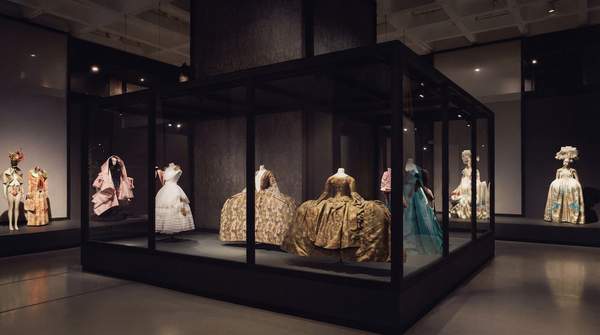
Period costume design is rarely a simple contest between truth and invention. The most admired designers of recent years—Alexandra Byrne on Mary Queen of Scots, Jacqueline Durran on Little Women—began with genuine historical research and then deliberately departed from it, because a costume's first job is not to reconstruct the past but to reveal a character. Understanding that trade-off is the key to reading period films with a sharper eye.
The Spectrum of Authenticity: From Historical Purism to Creative Interpretation
When viewers debate whether a costume is "accurate," they are usually standing at one end of a spectrum whose other end they have not named. At one pole sits strict reconstruction: garments rebuilt with the original silhouettes, fabrics, tailoring and embellishments of their era. At the other sits symbolic interpretation, where a designer borrows the period's outline but freely substitutes materials, colors or construction to serve a thematic point. Most films live somewhere between, and the interesting question is not where a production falls but why.
Fashion historian Sonya Abrego, quoted by Margot Atchison in The Franklin Post, frames the practical boundary of that spectrum: "If one were to re-create exact replicas with, for example, the original silk, embroidery, tailoring detail, and embellishments then yes, that's a challenge." Her point is that exact replication is a difficulty of degree, not a binary of care versus laziness. A costume can be historically faithful in silhouette and spirit while using modern substitutes—an approach Abrego endorses, noting that "there are materials that are comparable and more accessible that can work on camera. Textile technologies can make up for a lot of that."
This is where the useful distinction between accuracy and authenticity emerges. Accuracy is measurable: does the garment match the documented dress of its time? Authenticity is experiential: does it convince the audience of the world it depicts? A design can fail the first test and pass the second, which is precisely what the most discussed period films of the last decade demonstrate. The Franklin Post's commentary on Bridgerton makes the same observation from the audience side: viewers have picked apart its false details, yet its popularity suggests most people "appreciate the aesthetic over authenticity."
Why Designers Deviate: Factors Influencing Artistic Choices
Departures from the historical record are usually deliberate, and they cluster around three pressures. The first is production reality. Budget and material availability constrain what can be built; as Abrego explains, substituting fabrics reduces costs, and modern textiles can approximate the appearance of originals on camera. The second is audience perception. A scholarly paper on costume modeling in film and television argues that costume design must meet "the increasing aesthetic needs of the audience," and that productions overly focused on commercial interest can lose the artistry costume should carry. Designers calibrate for contemporary eyes, adapting historical styles so the film remains legible and engaging to viewers who are not, as Sophie Diego put it in an essay for StyleCircle, "history or fashion majors."
The third pressure is the most interesting: character. A costume that is period-perfect but emotionally mute serves the museum, not the story. Designers routinely let a character's inner life override the fashion plate—making a rebellious figure wear something anachronistically bold, or a pragmatic one wear something plainer than her class would demand. The Franklin Post poses the question directly: "where is the line between artistic storytelling and lazy research?" The honest answer is that the line is drawn case by case, and a viewer's judgment improves the moment they stop treating every deviation as an error.
There is, however, a real cost to abandoning history altogether. The Franklin Post notes that "completely ignoring the history you are pulling from has its consequences. One of these is the spreading of misinformation. If a movie presents a fictitious history, this will cause the public to believe in something false." Deviation, in other words, is defensible as interpretation; wholesale invention risks quietly rewriting the past for audiences who take the screen at face value.