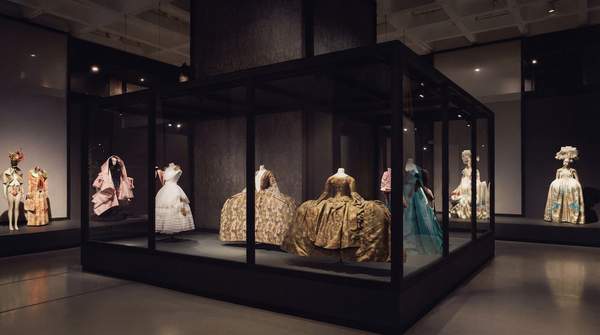
Fashion exhibitions are not arrangements of clothes; they are constructed arguments. Every layout, spotlight and caption is a deliberate choice guiding what you feel and what you conclude about a garment's cultural weight. This article breaks that practice into its working parts—a framework of narrative architecture and four conceptual approaches—so that the next exhibition you visit becomes something you can read as critically as a text.
The Art of Fashion Curation: Crafting Narratives in Exhibitions
What distinguishes curation from display? A curator does not simply hang garments on racks. As one practitioner account puts it, exhibition fashion curation uses spatial design and staging to communicate narratives through object arrangement and the visitor's experience. The garment is treated as a cultural artifact, and the exhibition becomes the medium through which its story is told.
At the heart of this practice sits what specialists call narrative architecture—the planned emotional and interpretive journey a visitor takes through a space, built from layout, lighting, display styling and interpretive media. The term matters because it names something easy to miss: the exhibition is designed, not found. Recognizing this turns passive viewing into active analysis.
The field is also a subject of formal research. A UKRI-funded project on exhibiting fashion, led from what its researchers describe as an exhibition-maker's perspective, interrogates how visually and spatially led exhibition development actually works—evidence that curation is studied as a rigorous professional practice, not merely an aesthetic instinct.
Elements of Narrative Architecture: How Exhibitions Tell Stories
How does an exhibition speak? Through identifiable techniques. The order in which you encounter pieces—spatial sequencing—shapes the story you absorb, so a curator choreographs your route as deliberately as an author structures chapters. Lighting design does quieter work: directional and colored light controls mood and pulls your eye toward specific details a curator wants you to notice.
Then there is the interpretive layer. Video, audio and text panels add context that objects alone cannot carry—historical, biographical, cultural. None of this is decoration. Each element answers an implicit question the curator expects you to ask, and noticing which questions are answered—and which are not—is itself an act of critical viewing.
Deconstructing Exhibition Narratives: A Curatorial Framework
Use this framework during any gallery visit: first identify the narrative-architecture elements in play, then ask which conceptual approach governs them. The two layers together explain both the how and the why of an exhibition.
| Element / Approach | Focus | Narrative Function | What to Look For |
|---|---|---|---|
| Spatial sequencing | The order of encounter | Shapes the story you absorb | Choreographed route; beginning and end points |
| Lighting design | Mood and emphasis | Directs attention to chosen details | Directional or colored light highlighting specifics |
| Interpretive media | Context beyond objects | Adds layers objects cannot convey | Video, audio, text panels answering unasked questions |
| Exhibition-maker's approach | Visual and spatial strategies | Builds meaning through the space itself | Attention to threshold, landscape, object and the body |
| Material-focused approach | Craft and production | Centers making and procedure | Technical data, production insights, hours of labor |
| Technology-enhanced approach | Augmented archives | Shows what fashion was and could become | Digital tools extending the archive |
The deconstruction works because each row isolates one deliberate lever a curator can pull. If an exhibition's captions recount embroidery hours rather than designer biography, the material-focused approach is steering the narrative; if the room's transition feels staged, the exhibition-maker's concern with the threshold is at work.
Conceptual Frameworks: Guiding Curatorial Strategy
Why do two exhibitions of similar garments feel entirely different? Because the underlying conceptual approach differs. One framework, described by the UKRI project's principal investigator, focuses on visual and spatial strategies organized around original museological concepts: threshold (the transition into the exhibition space), landscape (the space inhabited by object and viewer), object (exhibition content) and the body (physical and non-physical human forms). Here the room itself does the arguing.
A second approach centers material and process. In an exhibition documented by curators Angelica Vandi and Judith Clark, standard didactic labels were replaced with handwritten captions tied directly to mannequins, referencing an artisanal numbering system developed by Maison Margiela and offering production-specific insights—such as the number of hours the embroidery took. The curatorial intent was explicit: to center the experience on the material and procedural dimensions of craft.
A third strategy turns to technology. The same curatorial study imagines the archive as an augmented space, equipping the public with tools to understand not only what fashion has been but what it could become—part of a broader intellectual project toward practice that is, in their words, "more critically aware, inclusive, and in tune with the cultural and historical depth from which they emerge."
Beyond Aesthetics: Fashion as Cultural Commentary
These approaches converge on a shared ambition: exhibitions as cultural argument rather than celebration. When captions document labor hours, they implicitly raise questions of production and value. When augmented archives invite visitors to imagine fashion's possible futures, they ask the public to see the fashion system as something that can be rethought.
Vandi and Clark frame these technology-enhanced practices as contributing to reshaping that system itself—an explicitly critical, even inclusive, intellectual project. The point for the visitor is that social meaning is not incidental to fashion curation; it is often the destination. The garment becomes a vehicle for questions about the body, identity, labor and craft that the curator has chosen to foreground.
Analyzing Exhibitions: A Visitor's Toolkit
How do you put this into practice? Begin at the threshold: notice how the transition into the space is staged, because that transition already frames your expectations. Then trace the sequence—ask why this garment comes before that one, and what argument the ordering serves. Attend to the light: what details has it chosen for you? Finally, read the interpretive media closely, and ask what its emphasis—biography, technique, social context—reveals about the guiding conceptual approach.
Engaging with Exhibitions: A Critical Approach
The decision this framework supports: visitors should actively identify the curatorial elements and conceptual strategies employed in fashion exhibitions to gain a deeper, more critical appreciation. The measurable indicator of success is that the visitor can articulate the specific narrative being constructed and the techniques used to convey it after experiencing an exhibition. When you can name the story and its machinery, you have moved from spectator to reader—and the exhibition becomes what its makers always intended it to be: an argument you can engage, question and answer.
Sources
- What is fashion curation and why it matters — Indy Love Boutique
- Exhibiting Fashion — Gateway to Research
- Frontiers Publishing Partnerships