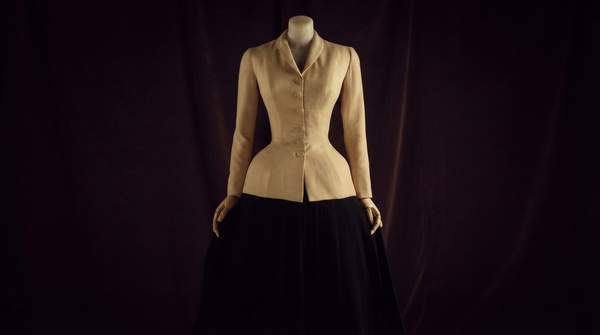
Christian Dior's debut collection of February 1947 changed the shape of women's fashion in a single morning by reversing everything the war years had imposed. Where wartime clothing had been boxy, padded and rationed, Dior presented rounded shoulders, tightly cinched waists and voluminous skirts that consumed fabric almost defiantly. The costume historians at the Metropolitan Museum of Art frame the moment precisely: after years of military and civilian uniforms, sartorial restrictions and shortages, Dior offered not merely a new look but a new outlook. Understanding why a single silhouette could carry such weight requires seeing it as a deliberate architecture—three coordinated design decisions—rather than one dress, and then tracing how that couture construction traveled from Parisian salons into the closets of ordinary American women through ready-to-wear and home sewing.
The Dawn of a New Era: Christian Dior's Revolutionary Debut
Dior was, by the standards of couture founders, a late starter. According to the Metropolitan Museum of Art's essay on the designer, he was born and raised in Normandy, moved to Paris at age ten, studied political science, served in the military, and only began his design career in 1935 by selling sketches in Paris; the designer Robert Piguet hired him in 1938. When he finally showed his own house's first collection in February 1947, he named its two lines for the silhouettes he sought to achieve, according to Colorado State University's Avenir Museum of Design and Merchandising: Corolle, meaning flower petals, and En 8, meaning figure eight.
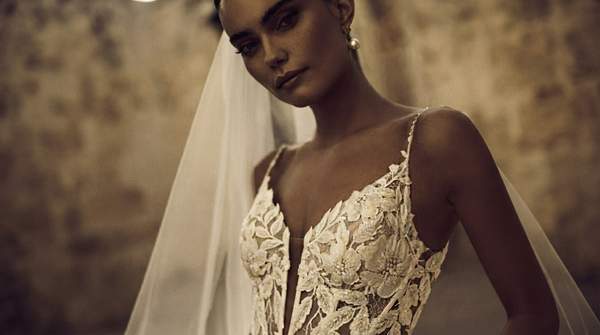
Both names describe bodies rather than garments—a flower opening, an hourglass curve—and that vocabulary signals the ambition of the collection. The Avenir Museum describes the result as a revolutionary silhouette, one whose rounded shoulders, cinched waist and very full skirt celebrated what the Met curators call "ultra-femininity and opulence" in women's fashion. What might have remained an elite Parisian moment became instead the defining image of the postwar decade, copied, adapted and sold far beyond the reach of a couture budget.
Architectural Foundations: Deconstructing the 'New Look' Silhouette
The New Look is best understood not as a single garment but as a system, in which three components work together to produce one continuous curved line from shoulder to hem. Each element answers the wartime silhouette with its opposite, and Dior himself described the transformation in floral terms in a vision recounted in TIME magazine's 1957 cover story on the designer. The structure is easiest to see when the components are isolated, which is the purpose of the framework below.
The Architectural Blueprint of the 'New Look'
Read each row as a design decision with a built-in argument: the form of the element, the wartime style it displaced, and the effect Dior intended. Together, the three decisions demonstrate that the New Look was a systematic design philosophy that created a radical new female form in fashion, rather than just a single style of dress.
| Component | Form of the element | Wartime style it displaced | Intended effect |
|---|---|---|---|
| Shoulders | Soft, rounded shoulders | Broad, padded shoulders of uniforms; Dior's "soldier-women with shoulders like boxers" | Replace martial hardness with a flowering, "ultra-feminine" line |
| Waist | Tightly cinched waist | Boxy, straight-cut torsos shaped by rationing and practicality | Waists "slim as vine stems," per Dior's own description |
| Skirt | Very full, voluminous skirt | Fabric restrictions and shortages that narrowed wartime skirts | Skirts opening "like blossoms," signaling opulence through cloth itself |
The evidence for this framework comes from consistent, converging descriptions. The Met's curators identify exactly these three features—rounded shoulders, a cinched waist, and a very full skirt—as the silhouette's defining elements, and Dior's own words, preserved through TIME's 1957 cover story, supply the imagery that explains them: "We were leaving a period of war, of uniforms, of soldier-women with shoulders like boxers," he said. "I turned them into flowers, with soft shoulders, blooming bosoms, waists slim as vine stems, and skirts opening up like blossoms." The metaphor is not decoration; it is the design brief. The Avenir Museum's account of how later ready-to-wear makers used "clever construction methods" to reproduce the shape confirms that the silhouette was engineered—built with structure under the cloth—rather than merely drawn.
A Post-War Statement: Opulence as Rebellion
Why did this particular architecture land with such force in 1947? Because every one of its three elements directly contradicted the constraints that women had lived under for nearly a decade. The Met's essay places the collection against its historical backdrop: after years of military and civilian uniforms, sartorial restrictions and shortages, Dior offered not merely a new look but a new outlook. In that context, a full skirt was not simply a fashion choice; it was a public statement that scarcity was over, or at least that women could dress as though it were.
A cinched waist and soft shoulder reversed the borrowed-from-uniforms practicality that had defined women's clothing when fabric was rationed and women's labor was mobilized. The celebration of "ultra-femininity and opulence," in the Met curators' phrasing, was itself a kind of defiance—a rejection of austerity as a permanent condition. The collection thus functioned on two levels at once: as couture, restoring Paris's claim to define how the world's women should dress, and as symbolism, marking the end of a wartime relationship between women's bodies and their clothes.
The Avenir Museum calls the silhouette revolutionary in the same breath as it describes its later diffusion, which underlines the point that contemporaries experienced it as a rupture, not a gradual trend.
From Parisian Salons to American Closets: The Democratization of Style
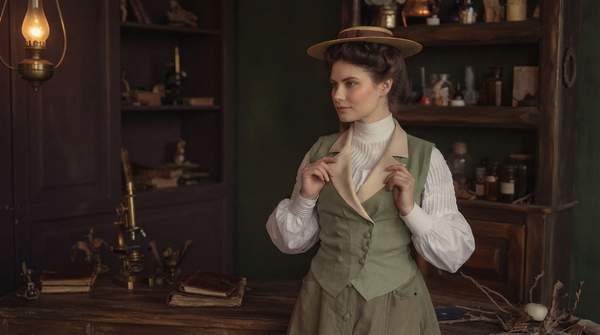
A Paris couture model was beyond the reach of almost everyone, yet within a few years the New Look's shape appeared in the wardrobes of women with no connection to haute couture budgets. The Avenir Museum's exhibition on Dior's New Look in the everyday American closet documents exactly this transition. As its curators explain, the revolutionary silhouette was made more attainable for the everyday woman in Colorado and across the United States through ready-to-wear apparel and home sewing patterns. The museum's evidence is unusually concrete: the clothing and accessories in its exhibition all have elements of Dior's New Look silhouette, but none of them are Dior brand.
Each item, the curators note, reflects the ability of ready-to-wear designers and marketers to use clever construction methods to achieve the New Look. The garments on display came from the closets of everyday American women without couture budgets who still kept up with the latest fashions from Paris—among them a 1950s American silk dress donated by Kathryn Shipley. This is the inference the evidence supports: the New Look's influence on ordinary wardrobes was carried by two specific channels, manufactured ready-to-wear and home sewing, which translated a couture architecture into affordable construction.
The silhouette thus survived its moment of exclusivity precisely because it could be reverse-engineered—rounded shoulders, nipped waist and full skirt approximated by industrial and domestic dressmaking alike.
Embracing the Legacy of the New Look
The New Look's afterlife ran along two tracks that the evidence distinguishes clearly. Within the House of Dior, the Avenir Museum reports that the New Look continued to be honored and reinterpreted by Dior's successors, from Yves Saint Laurent and Marc Bohan in the late 1950s through the 1980s, to creative director Maria Grazia Chiuri. Beyond the house, its elements spread through the American ready-to-wear and home-sewing channels described above, embedding cinched waists, rounded shoulders and full skirts in mid-century mainstream fashion.
The conclusion this record supports is twofold, and both parts rest on the sources' own qualifications: first, that the New Look was a deliberate, systematic design philosophy—a coordinated contrast to wartime fashion, articulated in Dior's stated vision and confirmed by the consistent descriptions of his silhouette; and second, that its widespread American adoption was significantly facilitated by ready-to-wear and home sewing patterns, the specific channels documented by the Avenir Museum.
For the reader deciding how to place this history, the practical judgment is to recognize the enduring influence of the New Look as a blueprint for feminine silhouettes and a symbol of post-crisis renewal in fashion. The testable indicator of that legacy is the continued presence of cinched waists, rounded shoulders, and full skirts in contemporary haute couture and ready-to-wear collections, as well as historical fashion retrospectives. Where a designer today builds structure beneath cloth to curve a shoulder and define a waist, the 1947 architecture—flower against boxer, opulence against ration—is still the reference point being measured against.
Sources
- Metmuseum
- Dior's "New Look" in the Everyday American Closet — Avenir Museum of Design and Merchandising
- Christian Dior’s New Look - The History and Evolution - GLAM OBSERVER