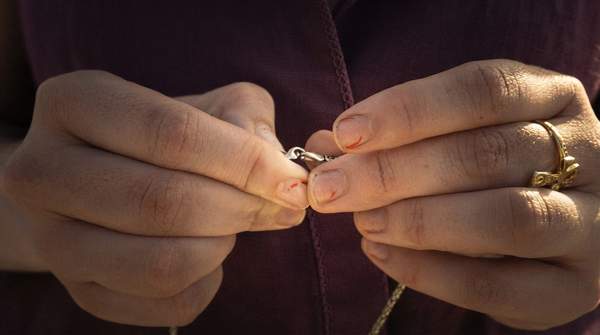
Every necklace and bracelet ends in a small mechanical decision, and the right answer depends on what the piece demands of it. Among the common modern clasps, the lobster clasp offers a well-rounded balance of strength and ease; the spring ring is subtler but harder for some hands to operate; the toggle embraces decoration at some cost to security; the box clasp pairs elegance with a locking tab and often a safety latch; and the S-hook, the oldest and simplest of the group, remains prized for its one-handed convenience and its affinity for high-karat gold. Understanding how each mechanism works, and what it asks in return, is the difference between a clasp that disappears into a design and one that quietly betrays it.
Common Jewelry Clasp Types: A Comparative Overview
The lobster clasp—also sold as the trigger or teardrop clasp—has become the default choice for many wearers precisely because it asks so few compromises. Arden Jewelers describes it as one of the most popular options for anyone seeking a well-rounded clasp that is relatively inexpensive, strong, and easy to use, and notes that it comes in a huge variety of styles and shapes, from the traditional oblong form to hearts, teardrops, and specialty designer interpretations. Its popularity rests on that combination: a mechanism robust enough to trust and simple enough to operate without fuss, in a body that can be styled to suit the piece.
The spring ring, by contrast, trades a measure of convenience for discretion. Because it is smaller than the lobster clasp, it reads as subtle and discreet on the chain—an asset on fine, delicate necklaces, where it remains one of the most common clasps in use. The price of that smallness is a small lever, which can make the clasp slightly harder to manage for people with limited dexterity. It is a mechanism that rewards a steady hand and punishes neither the eye nor the wallet.
The toggle clasp abandons concealment altogether. A bar passes through a ring, and rather than hiding at the nape of the neck, toggles frequently act as decorative elements in their own right—designers may place them at the front or side of a necklace so they become part of the overall style. Their bar-and-ring construction is large enough to operate easily, which is one reason they are popular for chunkier chains or statement pieces, where a fiddly miniature mechanism would be out of scale and out of character.
The box clasp works on a different principle: a small tab slides into a decorative box-shaped closure and locks into place with tension, and many versions add side safety latches for additional security. That locking architecture, together with their elegant look, explains why box clasps are commonly found in tennis necklaces, gemstone strands, and other formal jewelry—pieces where the clasp is expected to be both trustworthy and beautiful. The S-hook, finally, is the most primitive and most forgiving of the group: a simple S-shaped hook connecting two loops. Arden Jewelers notes that S hooks usually work best in higher karat gold—21k and above—because the metal is more malleable and does not become brittle as easily over time, and that one common modern use is with Thai Baht chains, which are typically made of high-karat gold.
Jewelry Clasp Comparison: Security, Ease, and Style
The table below gathers these five mechanisms side by side, evaluating each against the three criteria that govern most clasp decisions: how secure it is, how easily it can be operated, and whether its aesthetic role is to hide or to be seen.
| Clasp Type | Security | Ease of Use | Aesthetic Role |
|---|---|---|---|
| Lobster (trigger) | Strong; a well-rounded, trusted mechanism | Easy to use | Functional, but available in many styles and shapes, including designer forms |
| Spring ring | Common and reliable on fine chains | Small lever can be harder for people with limited dexterity | Subtle and discreet; suited to fine chain necklaces |
| Toggle | Bar-and-ring closure; less about concealment than display | Large bar and ring are easy to operate | Deliberately decorative; often placed at the front or side as part of the style; popular for chunkier chains and statement pieces |
| Box | Tab locks into place with tension; many include side safety latches | Tab slides into the box-shaped closure | Elegant; common in tennis necklaces, gemstone strands, and formal jewelry |
| S-hook | Not the most secure; the inherently open design can release if the chain is pushed or caught the wrong way | Simple to fasten with one hand | Functional with centuries of creative design options; associated with high-karat gold pieces such as Thai Baht chains |
Read horizontally, the table reveals the central pattern: no clasp maximizes all three dimensions at once. The mechanisms that hide best—the spring ring especially—demand the most from the wearer's fingers. The mechanisms that display best—the toggle, the ornate box—accept a more visible role in the design. And the simplest mechanism of all, the S-hook, purchases its one-handed ease with an openly acknowledged vulnerability: as Arden Jewelers cautions, if the chain is pushed or caught the wrong way, the hook can open inadvertently.
Choosing Your Clasp: Security, Ease, and Style
The selection process begins with the piece itself. A fine chain necklace, where the clasp should vanish, points naturally toward the spring ring's discretion—provided the wearer can manage its small lever. A chunky chain or a statement piece inverts the logic entirely: here the Blue Nile guide observes that toggles are popular precisely because the bar and ring are large enough to operate easily, and because the clasp can be repositioned as a visible element of the design rather than a hidden one.
Formal and high-value pieces suggest the box clasp, whose tension lock and optional safety latches offer security commensurate with tennis necklaces and gemstone strands, all within a closure elegant enough to belong beside them. Everyday pieces with no special demands are well served by the lobster clasp's balance of strength, affordability, and ease. And pieces in very high-karat gold—21k and above—have a natural partner in the S-hook, whose malleable-metal logic and one-handed simplicity suit traditions like the Thai Baht chain, so long as the wearer accepts the open design's known risk of accidental release.
Frequency of wear and the wearer's own dexterity deserve equal weight. A clasp that must be fasted and unfasted daily should be operable without frustration; a clasp fastened once for an evening can afford to be more demanding. A wearer with limited dexterity may find the spring ring's small lever an obstacle where a toggle's generous bar or an S-hook's simple hook would not.
Making Your Clasp Choice: A Practical Decision
Choose a jewelry clasp by balancing the desired security level, personal ease of use, and the aesthetic role it plays in the overall design of the jewelry piece, considering factors like the piece's value and weight. The successful choice can be checked against a simple standard: the chosen clasp effectively secures the jewelry during wear, is comfortable and easy for the wearer to operate, and complements the jewelry's design without compromising its integrity or value. A clasp that meets all three conditions—tested over ordinary wear, not merely at the moment of purchase—has done everything a clasp can be asked to do.