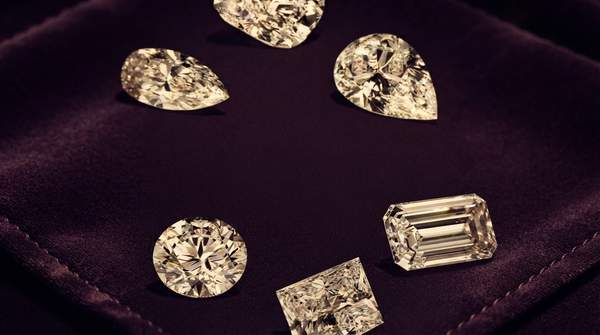
Every cut gemstone is a negotiation between light and stone, and the four most consequential styles resolve that negotiation in strikingly different ways. The cabochon's smooth dome forgoes sparkle to celebrate color and pattern; the round brilliant arranges dozens of facets to chase maximum light return; the oval stretches that brilliance into an elongated silhouette; and the marquise, or navette, drives the same faceting logic into two vulnerable points. Understanding what each cut prioritizes—and what each quietly sacrifices—turns a decorative object into a legible artifact of craft and intent.
The Art of Gemstone Cutting: Shaping Beauty and Durability
The cut is the element of a gemstone that lapidary skill alone controls, and it is where beauty, brilliance, and durability converge. As The Natural Gemstone Company explains, a well-considered cut avoids thin edges or sharp points susceptible to chipping or breaking, while precise angles, symmetry, and proportions work together to bring out the best in the rough material. The same firm notes that durable cuts matter most in rings and other jewelry subject to daily wear, which is worth remembering: an heirloom stone that lives in a brooch can afford risks that a ring worn weekly cannot. Every choice that follows flows from this tension.
Faceted vs. Cabochon: Two Fundamental Approaches
All cutting divides into two fundamental philosophies. Faceted stones carry multiple flat surfaces arranged in specific patterns to maximize light reflection and brilliance, a strategy reserved for transparent gemstones with excellent clarity and color. Cabochons, by contrast, present a smooth, rounded shape with a flat base and convex top. The cut exists because some rough material demands it: gemstones with inclusions or color zoning benefit from the cabochon treatment, which minimizes imperfections and highlights natural patterns and colors rather than punishing flaws with a window of distorted light.
The practical rule a collector can carry: the quality of the rough largely dictates the philosophy. Opaque or translucent stones such as turquoise, opal, and moonstone become cabochons because their colors, patterns, and optical phenomena—not their transparency—are their principal assets. Clean, transparent rough earns faceting, which transforms clarity into visible sparkle. Jen Volkodav Jewelry Design adds a nuance to this old rule, observing that contemporary high-quality cabochon work has grown more popular lately, so the cabochon is no longer purely a fallback for lesser rough.
The Round Brilliant Cut: Maximizing Sparkle
The round brilliant is the benchmark against which all faceted cuts are measured—symmetrical, sparkling, and according to Jen Volkodav Jewelry Design, developed in the early twentieth century specifically to maximize light performance and brilliance. Its anatomy explains the ambition. As described by the editorial team at Elora, the table, the large flat surface atop the stone, admits light that then reaches the lower facets before returning to the eye, while the crown's angled facets break that light into flashes of spectral color known as fire.
Yet brilliance is more than raw light return. Writing in GIA's Gems & Gemology, Al Gilbertson cautions that a hypothetical gem returning 100% of light with no dark areas would measure brighter than a stone with areas of contrast—but would appear far less appealing. Contrast, he demonstrates, is a critical factor in face-up brightness. The collector's takeaway is that a well-cut brilliant is not the brightest possible stone in a purely photometric sense; it is the one whose light and dark are most pleasingly distributed.
Elegant Curves: Oval and Marquise Cuts
The oval cut, which The Natural Sapphire Company dates to the late 1950s, deliberately borrows the brilliance and fire of round stones while stretching them into a more distinctive shape—an elongated silhouette that also flatters by creating the illusion of a larger gemstone. The marquise, also known as the navette, pushes further: the same source describes it as cut to reflect the most light and offer maximum sparkle and depth of color, a design of deliberate visual drama.
That drama carries a cost. The marquise's two end points are its defining feature and its structural weakness, and perfect symmetry of those points is essential so the stone sits properly in its setting and chips less readily. Here the two philosophies of cutting collide in a single stone: the navette adopts the faceting logic of the brilliant while inheriting the pointed vulnerability that The Natural Gemstone Company warns against. The cut's impact is high, but so is its dependence on the setting.
Comparing Gemstone Cuts: Light, Durability, and Use
The table below synthesizes the four cuts across the dimensions that actually drive a collector's evaluation—what each cut does with light, where it is vulnerable, and what it was made for. Read the rows as trade-offs rather than rankings: each entry represents a coherent design philosophy, not a step in quality.
| Cut Style | Primary Optical Effect | Durability Considerations | Historical Context / Typical Use |
|---|---|---|---|
| Cabochon | Smooth, rounded surface showcases natural color, patterns, and optical phenomena rather than brilliance; minimizes visible imperfections. | Simple rounded shape minimizes risk of chipping; favored in ancient civilizations for its robustness. | Oldest favored approach; opaque or translucent gems like turquoise, opal, and moonstone. |
| Round Brilliant | Faceted design maximizes light return, brilliance, and fire—though pleasing contrast, not total brightness, makes the effect appealing. | Symmetrical shape with no vulnerable points; a well-executed cut avoids thin edges that could chip. | Developed in the early twentieth century; standard for diamonds and transparent gemstones. |
| Oval | Offers the brilliance and fire of round stones in an elongated form that creates the illusion of a larger gemstone. | Curved outline avoids sharp points; durability still depends on cut quality and a protective setting. | Created in the late 1950s; transparent gems where a round look would feel predictable. |
| Marquise (Navette) | Cut to reflect the most light, offering maximum sparkle and depth of color. | Two pointed ends are vulnerable to chipping or breakage; symmetry of the points is essential so the stone sits properly in its setting. | Also known as the navette; chosen for high visual impact in transparent gems. |
Read one way, the table traces a spectrum: the cabochon protects and flatters the stone's body, while the faceted cuts increasingly spend structure to purchase light. The oval sits at the balanced center—round-stone sparkle without sharp points—while the marquise marks the point of maximum risk and maximum reward.
Making Your Choice: Balancing Beauty and Practicality
Collectors should choose a gemstone cut by balancing their aesthetic preference for light performance or color display with the practical considerations of durability and the gem's intended use. A stone destined for daily-wear jewelry argues for the cabochon's robustness or the oval's forgiving outline; a piece that will live carefully can justify a marquise's fragile brilliance; and when sparkle is the priority, the round brilliant remains the standard the others reference. The rough itself narrows the field first, since clarity and transparency largely determine whether faceting is even an option.
Whatever the choice, the measurable indicator of a sound decision is the visual appeal and longevity of the gemstone in its setting. Inspect the stone before purchase for the exact vulnerabilities this comparison identifies—thin girdles, asymmetric points, uneven dark regions where contrast should sparkle—and confirm the setting protects whatever edges the cut exposes. A cut that survives its first decade of wear without a chipped point is the clearest proof the trade-off was chosen well.
Sources
- Introduction to Gemstone Cuts - The Natural Gemstones Company | The Natural Gemstone Company
- A Guide to The Art and Evolution of Gemstone Cuts — Jen Volkodav Jewelry Design
- The Hidden Geometry of a Diamond: Understanding Its Facets and Sparkle — Elora
- Gemstone Cuts, Shapes, and Sizes — The Natural Sapphire Company