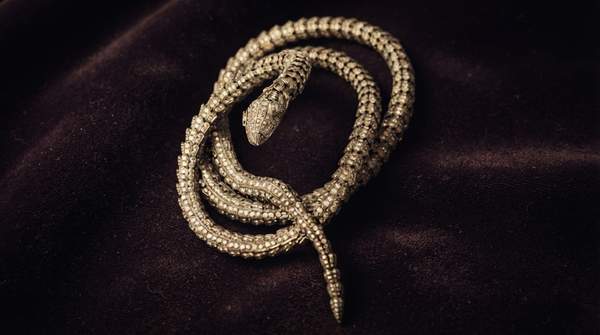
Three motifs dominate the symbolic vocabulary of haute joaillerie: the serpent, the celestial bodies of stars and sunbursts, and the dragon. Each carries meanings rooted in ancient Egypt, Greco-Roman culture and Chinese tradition, and each has been claimed by a particular house—Bulgari's Serpenti, Cartier's Le Baiser du Dragon—whose identity is now inseparable from the symbol it chose to reinterpret.
The Enduring Allure of Symbolic Jewelry
Jewelry has never been merely decorative; across continents and centuries, specific forms have served as compressed statements of belief, protection and status. A survey of symbols in jewelry from around the world records that in Northern Africa, stars and sunbursts signified guidance, protection, hope and energy, while snakes stood for fertility and guardianship. In China, traditional motifs such as the dragon symbolized strength and imperial power, and the phoenix grace and renewal, the two often worn together to signify harmony between masculine and feminine energies.
Antique European jewelry developed its own symbolic lexicon, one catalogued by Tiggy Cowan Taylor in a reference guide to antique jewellery symbols: the snake for everlasting love and wisdom, the star for spirit and guidance, the sun for power, glory and life-giving force. What distinguishes high jewelry is not the invention of new symbols but the deliberate adoption of these old ones, refined into forms so consistent that the motif becomes the house's signature. The three cases that follow show how that translation works.