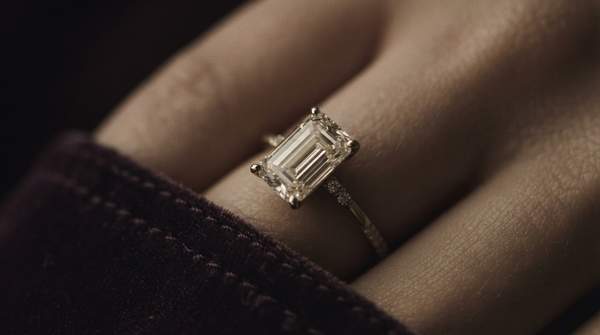
The four major gemstone cutting styles—Brilliant, Step, Rose, and Mixed—divide along a single optical axis: whether a stone's facets are arranged to throw light back at the viewer as sparkle, or to frame the gem's internal color as a pool of saturated hue. The round brilliant cut, the most precisely engineered shape in jewelry according to the International Gem Society, exists to maximize light return; the step cut takes, in that same organization's phrasing, "a completely different approach," building hall-of-mirrors effects that showcase clarity and depth of color. This is why diamonds are typically brilliant-cut while emeralds are almost invariably step-cut: the cut is chosen to serve the stone's particular virtue, not merely to follow fashion.
The Brilliant Cut: Maximizing Light and Sparkle
Before comparing cuts, it helps to replace the word "sparkle" with the terms gemologists actually use. Brilliance is the brightness a gem returns to the eye—white light reflected back from within the stone. Fire is the companion effect: the dispersion of that light into flashes of spectral color. The brilliant cut is engineered to deliver both at once, which is why a well-cut diamond appears to burn rather than merely shine.
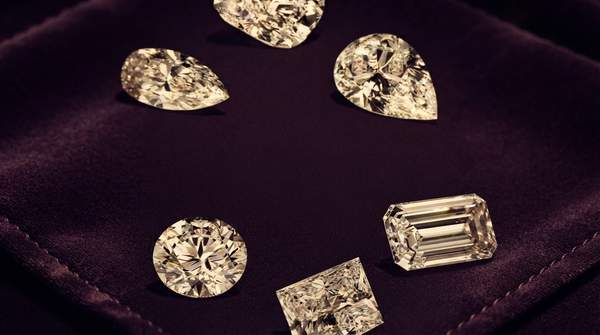
Structurally, the brilliant cut is typically round, built from a complex pattern of triangular and kite-shaped facets. A standard round brilliant comprises one table facet, eight kite facets, eight star facets, and sixteen lower girdle facets—57 facets in total, or 58 when the tiny culet at the pavilion tip is counted, as a gemstone-cutting guide from the trade site Star Harvest details. The consequence of this precise geometry, the same guide notes, is that light entering from any angle reflects efficiently back to the viewer rather than leaking out through the bottom of the stone.
The style is a relatively modern refinement. The modern round brilliant was formalized in 1919, superseding rounder antique predecessors such as the Old European cut—round diamonds with a smaller table, a taller crown, and an open culet often visible as a small dot through the top of the stone, which a Louis Martin Jewelers guide to Art Deco jewelry identifies as typical of pieces from that earlier era. The brilliant cut's dominance since then rests on a straightforward premise: it is the shape that most completely converts a gem's optical potential into returned light.
That premise suits some stones far better than others. The brilliant cut is ideal for diamonds and for any gem where maximizing sparkle is the priority, since its faceting amplifies the inherent light performance of the stone. It also carries a practical benefit: because its dense, angular faceting breaks up the interior view, stones with inclusions may appear more appealing when brilliant-cut, as the style disguises imperfections or turns them into visual interest.
The Step Cut: Showcasing Color and Clarity
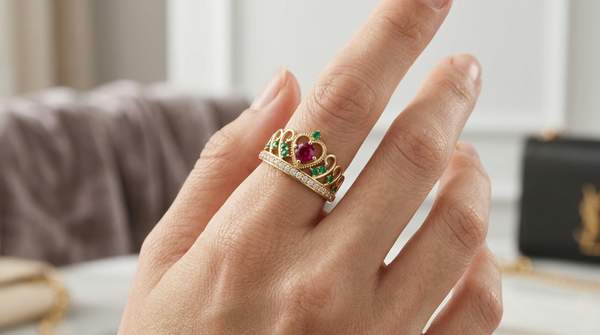
Where the brilliant cut scatters light, the step cut organizes it. Rather than maximizing sparkle, step cuts create what the International Gem Society calls sophisticated "hall-of-mirrors" effects: rectangular surfaces arranged in parallel rows that resemble a staircase, hence the name. The emerald cut is the most famous member of the family, with 58 surfaces arranged in three distinct sections—long, clean planes that act less like mirrors bouncing light randomly and more like windows into the stone.
The optical consequence is a deliberate inversion of the brilliant cut's goal. Step cuts emphasize the internal beauty and color of the stone over intense sparkle, showcasing clarity and deep color saturation rather than fire. This makes clarity critical: inclusions that a brilliant cut would disguise become plainly visible across a step cut's broad, open facets. For that reason the style is reserved for clear gemstones with outstanding color and clarity—emeralds, sapphires, and aquamarines among the classic examples—stones whose virtue is their body of color rather than their light return.
Historically, the step cut traces its lineage to the early sixteenth century, but its defining era arrived with Art Deco. Writing for the Royal Asscher diamond house, Milana Cerniha describes how the long, parallel facets of step cuts "reflected the architectural spirit of the era, creating a sophisticated interplay of light and shadow," with emerald cuts, Asscher cuts, and baguette diamonds set into striking platinum creations. The Asscher cut itself was introduced by Joseph Asscher in Amsterdam in 1902—a square silhouette with cropped corners and concentric steps that offered something entirely different from the brilliant cuts dominating other jewelry designs. A Louis Martin Jewelers guide confirms the association: baguettes, emerald cuts, and Asscher cuts became hugely popular and are closely tied to the Art Deco period.
The step cut also carries a protective logic. Gems with cleavage planes, such as diamond and topaz, or brittle structures, such as emerald, need shapes that shield their vulnerable corners; the emerald cut's beveled corners are designed precisely to reduce the risk of chipping. The style that best displays an emerald's color is, not coincidentally, the style that best preserves the stone.
Gemstone Cut Styles: Brilliance vs. Color Saturation
The table below correlates each of the four major cut styles with its primary optical goal, its defining facet structure, its historical context, and the gem varieties for which it is best suited, so the brilliance-versus-color trade-off can be read at a glance.
| Cut Style | Primary Optical Goal | Key Facet Characteristics | Historical Context | Best For |
|---|---|---|---|---|
| Brilliant | Maximizes brightness, fire (dispersion), and scintillation—maximum light return and sparkle | Typically round; complex pattern of triangular and kite-shaped facets—one table, eight kite, eight star, sixteen lower girdle—57 or 58 facets including the culet | Modern round brilliant formalized in 1919; earlier round Old European cuts with smaller tables and open culets | Diamonds and gems where sparkle is the priority; also disguises inclusions |
| Step | Showcases clarity and deep color saturation; "hall-of-mirrors" effect emphasizing internal beauty over sparkle | Long, parallel facets arranged like a staircase, often rectangular or square; emerald cut has 58 surfaces in three sections, with beveled corners | Origins in the early 16th century; hugely popular in the Art Deco era; Asscher cut introduced in Amsterdam in 1902 | Clear stones with outstanding color and clarity: emeralds, sapphires, aquamarines; inclusions show readily, so clarity is critical |
| Rose | A softer, subtler glow rather than the intense sparkle of brilliant cuts | Flat base beneath a dome-shaped top of triangular facets meeting at a single apex | Origin in the 16th century; associated with antique and romantic jewelry styles | Antique and romantic jewelry styles where a gentle, vintage glow is desired |
| Mixed | A balance of brilliance and color enhancement—what the International Gem Society calls "best of both worlds" | Combines brilliant-style and step-style faceting within a single stone | — | Gems where both returned light and body color deserve emphasis |
Choosing the Right Cut: Brilliance vs. Color Saturation
The Rose cut, the oldest of the four styles in continuous romantic currency, demonstrates that the trade-off has been understood for centuries. Emerging in the sixteenth century, it pairs a flat base with a dome-shaped top of triangular facets that meet at a single apex, producing a softer, subtler glow than brilliant cuts achieve. It remains the natural choice for antique and romantic jewelry styles, where the aim is candlelit gentleness rather than modern fire.
The Mixed cut addresses the trade-off directly by splitting the difference within a single stone, combining brilliant-style and step-style faceting so that a gem can return light while still presenting its color—the approach the International Gem Society summarizes as "best of both worlds." Related square designs that marry the fire of a brilliant cut with a modern, geometric appeal point in the same direction: cuts need not choose a single optical identity when a stone's properties reward both.
Two further considerations sit outside the brilliance-versus-color axis but shape the decision in practice. First, clarity: included stones may appear more appealing when brilliant-cut, since that style disguises imperfections, whereas a step cut lays them bare. Second, special optical phenomena demand their own treatment—cat's-eye chrysoberyl must be cabochon-cut to show its silky eye line, and star sapphires rely on domed surfaces to reveal their star, which is why the unfaceted cabochon persists alongside the four faceted styles. Durability completes the picture: brittle emerald and cleavage-prone topaz need protective shapes such as the emerald cut's beveled corners.
Read as a framework, the four styles form a spectrum rather than a ranking. The Brilliant cut answers the question "how much light can this stone return?"; the Step cut answers "how deeply can this stone's color be seen?"; the Rose cut substitutes atmosphere for either; and the Mixed cut negotiates between them. The correct choice depends on which question the gemstone itself is best equipped to answer.
Making Your Choice: Prioritizing Sparkle or Color
When selecting a gemstone, prioritize a Brilliant cut for maximum sparkle and light return, or a Step cut to emphasize deep color and clarity. Consider a Rose cut for a vintage aesthetic with a soft glow, or a Mixed cut for a balance of both brilliance and color enhancement. The measurable indicator of a well-matched choice is straightforward: the visual appearance of the gemstone, specifically its brightness, fire, and color intensity, directly reflects the chosen cut style's intended optical goal. A diamond that scintillates under candlelight and an emerald whose green reads deep and unbroken across its open facets are both evidence that the right cut was chosen for the right stone.
Sources
- Overview of Gem Cutting Styles - International Gem Society
- The Essential Guide to Different Gemstone Cuts - Star Harvest — Star Harvest -
- Art Deco Jewelry Guide: History, Identification & Value — Louis Martin Jewelers - Fifth Avenue - NYC
- Step Cut Diamonds: Art Deco Elegance & Modern Engagement Rings - Royal Asscher