Haute couture houses do not choose their presentation format by accident. Between the salon show and the full-scale spectacle lie four archetypal approaches—the intimate presentation, the traditional catwalk, the theatrical production and the immersive digital hybrid—each with a distinct effect on narrative, audience experience and brand communication. Understanding how they differ, and why a designer selects one over another, is the key to reading any couture week with a sharper eye.
Intimate Presentations: Craftsmanship Up Close
The salon-style presentation trades spectacle for proximity. Guests are invited to spend time with the pieces, meet the designer and the brand's communications team, and examine the minute details of a garment—its accessories, hair and makeup—at close range. As fashion industry commentator Samantha Dwyer observes, this intimacy means each guest "feels like they are front row at the show," and photographers can capture the full vision of the designer without the blur of a moving runway.
The narrative payoff is control. Presentations allow a house to steer the storytelling behind a collection and build a deeper connection with the press, buyers and influencers in the room, as fashion writers at Glam Observer note. The trade-off is exposure: with guests just centimetres away, the work must be flawless, and nothing can hide.
Haute Couture Week in July 2026 offered a textbook case. Wallpaper*'s Jack Moss reported that Michael Stewart of London label Standing Ground presented his A/W 2026 collection at the Irish Embassy on Avenue Foch in a salon-style format that left guests "just centimetres from his exacting creations." Stewart works with private clients rather than wholesale retailers, and the format matched the made-to-order nature of his elongated, body-contouring gowns—a presentation built for close inspection rather than mass broadcast.
Traditional Catwalk: Focused Garment Display
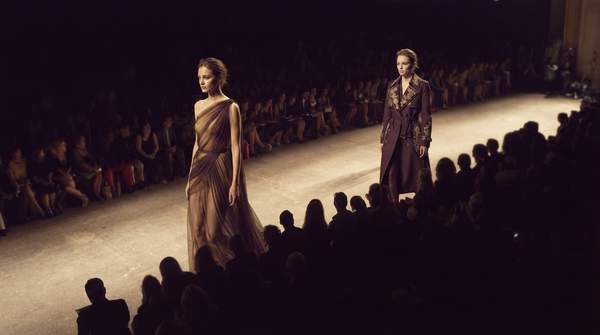
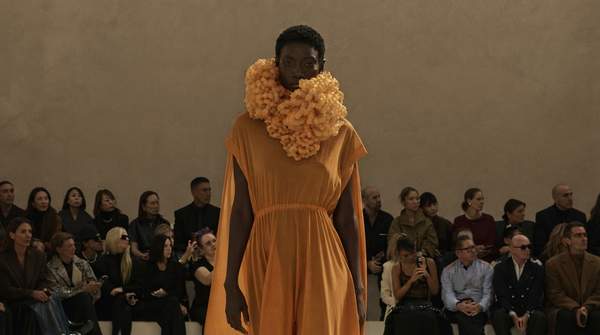
The linear runway remains the industry's standard for a reason: it is functional, legible and fast. Garments are shown in motion, giving viewers multiple angles to appreciate design and craftsmanship, while music and lighting deepen the emotional impression. The audience is captive, seated and watching the same sequence at the same time, which concentrates attention on the collection as a cohesive whole.
The format's weaknesses are the mirror of its strengths. PR strategist Danika Daly points out that looks are seen only briefly, making it harder for guests to examine each piece; smartphone photos often show up as a blur, impeding content-sharing; and seating capacity is finite because everyone watches simultaneously. Beauty details such as nail art go largely unseen from many seats. The catwalk communicates a collection's mood efficiently, but it does not invite lingering.
Theatrical Spectacles: Grand Narratives and Escapism
Where the catwalk displays clothes, the spectacle builds a world. Research on runway architecture describes how staging integrates lighting, sound, textures and movement to deepen emotional connection and leave lasting impressions. Louis Vuitton's autumn/winter 2012 show, staged on a linear runway with a working steam train, blended industrial nostalgia with luxury fashion for a theatrical, dynamic presentation—the set itself became part of the story.
These productions often incorporate elements of theatre, art and technology to create a holistic experience, transporting the audience into a specific narrative rather than merely showing them clothes. The risk is that the narrative can overshadow the garments, and that dividing audiences—as Jonathan Anderson's raucous Paris menswear show did, drawing online criticism that CNN's style coverage reported—can cut both ways for a house's message.
Immersive and Digital Hybrids: Beyond Physical Boundaries
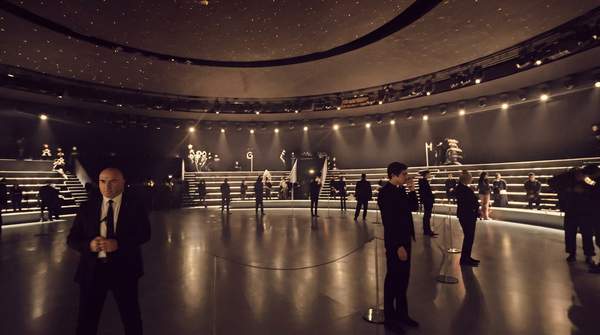
The newest format merges physical staging with digital technology to dissolve the limits of the room. Balenciaga's autumn/winter 2020 show, staged in shallow water with digital projections, merged conceptual and emotional engagement in a hybrid physical-digital runway—an approach that extends the audience beyond those physically present and opens narrative possibilities no seated show can match.
Alexander McQueen's spring/summer 2015 show points in a related direction: a circular runway with minimalist design and dramatic lighting created an immersive, intimate experience emphasizing transformation and cultural narratives. The hybrid format's advantage is reach and conceptual freedom; its challenge is preserving the tactile, in-person connection that couture's craftsmanship depends on.
Comparing Haute Couture Presentation Formats
The four formats can be set side by side across the dimensions that matter most to a house: how the audience experiences the work, what narrative the format can carry, and what each does best. The table below draws the distinctions together.
| Format Type | Audience Experience | Narrative Impact | Key Advantage | Example Type |
|---|---|---|---|---|
| Intimate Presentation / Salon Show | Guests examine garments closely, meet the designer, and interact in a personal, controlled setting; each guest effectively has a front-row view. | Narrative centers on bespoke craftsmanship and personal connection; the close atmosphere leaves the brand exposed, demanding perfection. | Detailed appreciation of handcraft and a personal bond with the brand; the experience can run from a day to a week rather than minutes. | Standing Ground's salon-style A/W 2026 presentation at the Irish Embassy, Paris, suiting a made-to-order client model. |
| Traditional Catwalk | A captive audience sees garments in motion as a cohesive whole, enhanced by music and lighting; looks pass quickly and seats are finite. | Linear and rapid, emphasizing the clothing itself and a clear, unified collection mood. | Electrifying shared energy and significant buzz; primarily functional for displaying garments to buyers and press. | The standard linear runway show of a fashion week schedule. |
| Theatrical Spectacle | The audience is transported into a specific world through elaborate sets, unconventional venues and dramatic storytelling. | Grand, escapist narrative in which the staging itself carries meaning, blending theatre, art and technology into a holistic experience. | Deep emotional impression and cultural resonance that outlast the clothes alone. | Louis Vuitton FW 2012's runway with a working steam train. |
| Immersive / Digital Hybrid | Physical staging fused with digital projections merges in-room and remote engagement. | Conceptual and emotional narratives that exceed the physical boundaries of the venue. | Extended reach and conceptual freedom beyond a seated audience. | Balenciaga FW 2020's shallow-water runway with digital projections. |
Read across the rows, the table reveals a clear pattern: as audience scale grows from salon to spectacle, narrative control shifts from the garment's details to the show's concept. No format dominates every dimension—the choice is a trade-off, not a ranking.
Strategic Choices: Why Brands Pick a Format
Format selection follows identity. A house built on meticulous handcraft and private clients, like Standing Ground, gains from a salon where that craft is visible; a house whose story is conceptual and image-led gains from spectacle or digital staging. Presentations suit collections whose value lies in detail and bespoke narrative, while runway shows suit collections that communicate through silhouette, movement and unified mood.
Audience goals matter equally. Presentations give press and photographers the time to capture detailed images that share well, while runway shows create a captive audience and the buzz of a shared event—though competing shows on the same day force editors and celebrities to choose which to attend, as Daly notes, and smaller brands showing alongside bigger names can struggle to draw top publications. Budget and logistics, finally, set the outer boundary: a salon at an embassy and a water-filled hybrid stage are simply different orders of production, and the strategic analysis here concerns the artistic and communicative fit rather than the cost sheet.
Choosing the Right Stage for Your Narrative
Fashion brands should strategically select a presentation format that aligns with their brand identity, collection theme, and desired audience engagement goals. The salon rewards perfection and proximity; the catwalk rewards cohesion and energy; the spectacle rewards world-building; the hybrid rewards conceptual reach. The chosen format's effectiveness can be observed through audience engagement levels, media buzz, and the clarity of the collection's narrative as perceived by critics and consumers. Those three indicators—engagement, buzz and narrative clarity—are the measurable test of whether a house picked the right stage for its story.
Sources
- Fashion Shows VS Presentations - GLAM OBSERVER
- The very best of Haute Couture Week — Wallpaper*
- How to Choose Between a Runway Show or Presentation at Fashion Week — PR Couture | Career + Agency + Freelance Resources for Communication Pros
- The Architectural Stage: Exploring how Runway Design Shapes Fashion Communication — Ijraset
- A breath of fresh fantasy at Paris Couture Week — CNN