This year, Paris Fashion Week men's shows were rescheduled to early morning slots to avoid extreme heat. The rescheduling of Paris Fashion Week men's shows to early morning slots directly demonstrates how climate change impacts global fashion events, forcing organizers to prioritize operational resilience.
London Fashion Week, however, sees increased participation and the return of major brands. This contrasts sharply with a broader fashion week circuit forced to fundamentally alter its operations and design principles due to climate change. Such tension reveals a divergence in how major fashion hubs are coping with environmental pressures.
Consequently, fashion weeks will likely become more geographically diverse and climate-responsive, emphasizing functional innovation alongside aesthetic appeal. The Hong Kong Trade Development Council (HKTDC) presented a showcase of innovative Hong Kong design at London Fashion Week, according to Reuters Connect. The international collaboration involving the Hong Kong Trade Development Council (HKTDC) showcase solidifies London Fashion Week's growing role as a global stage for diverse, innovative design talent, particularly as other runway events evolve under climate duress.
London's Resurgence: A Growing Global Hub
- London Fashion Week 2026 featured 41 runway shows and 20 presentations, according to the BBC.
- Participation in London Fashion Week 2026 increased by more than 10% compared to the previous year, the BBC reported.
- Temperley London and Joseph returned to the London Fashion Week schedule after seven and nine-year breaks, respectively, according to the BBC.
The significant increase in shows and the return of established brands confirm London Fashion Week's renewed prominence and appeal within the global fashion calendar. The significant increase in shows and the return of established brands positions London as a potentially more stable platform amidst climate challenges affecting other major fashion cities, drawing talent and investment.
Climate's Catwalk: Adapting to a Warmer World
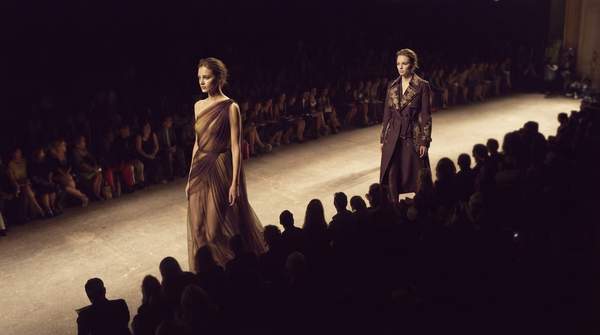
Beyond the initial rescheduling, Paris Fashion Week men's shows faced early morning slots to avoid extreme heat, according to Dazed. The operational shift of Paris Fashion Week men's shows to early morning slots reflects a broader industry imperative. H&M, for instance, announced its autumn collection would feature lighter materials, anticipating soaring September temperatures, Dazed reported. Jonathan Anderson further exemplified this trend, showcasing semi-transparent suits crafted from translucent silk chiffon at Dior's SS27 men’s show, a design choice directly influenced by warmer climates.
Extreme weather forces immediate, tangible changes to both fashion week logistics and the fundamental materials and aesthetics of collections. H&M's proactive shift to feature lighter materials in its autumn collection proves climate change is an immediate operational challenge, compelling fundamental design changes across the industry, not merely a distant threat.
New Faces and Established Names Define the Scene
Tolu Coker opened London Fashion Week 2026, according to the BBC. Tolu Coker opening London Fashion Week 2026 demonstrates the platform's commitment to showcasing new and diverse voices in fashion. The event successfully combined these fresh perspectives with the return of established houses.
London Fashion Week remains a vital platform for both established houses making a comeback and groundbreaking new talent. The blend of established houses and groundbreaking new talent creates a unique ecosystem where traditional houses can adopt or be inspired by climate-adaptive strategies from agile newcomers, cementing London's potential as a crucible for climate-adaptive fashion innovation.
The Future of Fashion: Innovation and Adaptation
Innovations around cooling technologies and UPF clothing will soon become a large market, yet Western fashion has been slow to adapt, according to Dazed. Western fashion's slow adaptation to innovations around cooling technologies and UPF clothing reveals a lag in integrating climate-adaptive solutions into mainstream design. However, the influx of innovative Hong Kong designers at London Fashion Week, featuring collections from four emerging designers including Angus Tsui and Bettie Haute Couture, according to modemonline, positions London as a critical gateway for new climate-resilient materials and designs to penetrate the global market.
The slow adoption of climate-adaptive technologies in Western fashion presents both a challenge and a significant market opportunity for brands willing to innovate. The dynamic of slow adoption and significant market opportunity ensures future fashion success will hinge on proactive adaptation and the integration of functional, climate-responsive design.
Beyond the Runway: Broader Implications
Is London Fashion Week becoming more accessible for new designers?
Yes, London Fashion Week increasingly demonstrates accessibility for emerging talent. AGRO Studio, a London-based fashion brand, displayed its designs for the first time at London Fashion Week 2026, according to the BBC. AGRO Studio displaying its designs for the first time at London Fashion Week 2026 signals a broader democratization and evolving landscape for industry participation, allowing new voices to gain global exposure and potentially influence climate-adaptive trends.