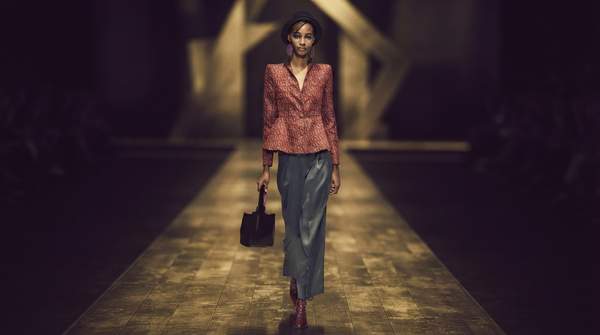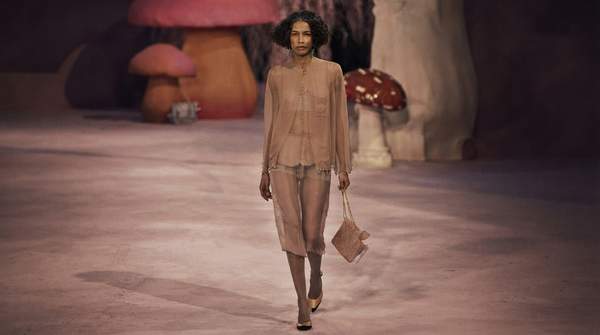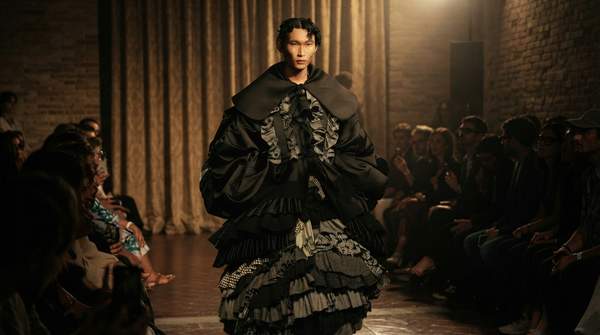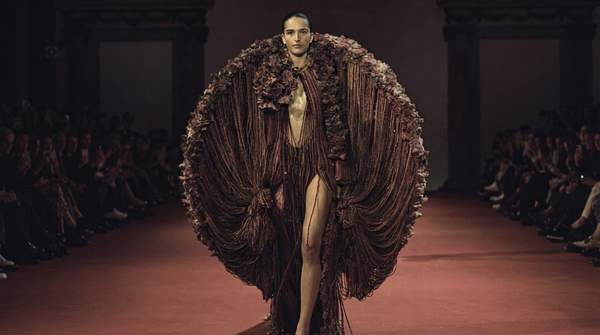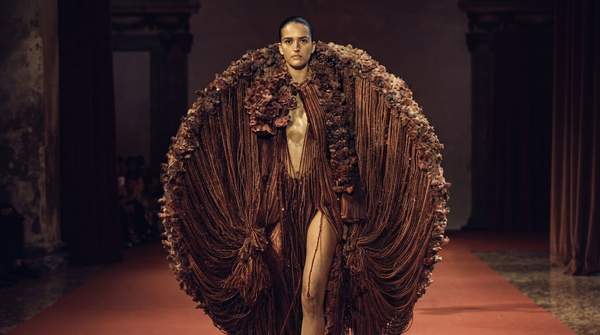
Behind every haute couture runway presentation sits an invisible architecture of music and sound, built by a small team of specialists who translate a collection into an auditory world. The clearest recent illustration is the Chanel Haute Couture Spring-Summer 2025 show, staged at the Grand Palais in Paris on 28 January 2025, where music supervisor Michel Gaubert, composer Gustave Rudman, and spatial audio technologists together turned the historic venue into what 4DSOUND, the technology company involved, describes as a grand, immersive spatial sound stage.
Introduction: The Unseen Architect of Runway Narratives
Fashion audiences tend to remember the clothes, the set, and the models, but the soundtrack often determines how all of it is felt. A runway show compresses a designer's season-long creative argument into roughly fifteen minutes of walking, and sound supplies the emotional connective tissue between garments and audience. In haute couture, where a single show must convey exceptional craft and a complete narrative, that soundscape is not assembled casually. It is commissioned, composed, and engineered by named professionals working from concept to final cue, in the manner documented by 4DSOUND's account of the Chanel Spring-Summer 2025 Haute Couture presentation.
Key Roles and Collaborative Process in Haute Couture Sound Design
The credited team for Chanel's Spring-Summer 2025 Haute Couture show reveals a clear division of labor. Michel Gaubert served as music supervisor, the figure who conceives the overall sonic direction and, according to 4DSOUND's project page, envisioned the collaboration that would transform the Grand Palais into an immersive spatial sound stage. Gustave Rudman provided the original composition, while Salvador Breed handled spatial sound design. The custom software enabling that spatialization came from 4DSOUND, with Poul Holleman credited for its development.
This structure is not incidental. Gaubert, who has spent decades creating soundtracks for fashion shows across Milan, London, and New York, described his work to 032c as a process of interpretation: he works with a designer or brand to express the show's identity sonically, as when he built a specifically German, Berlin-rooted set of songs to express what the magazine 032c is about. The supervisor sets the vision, the composer realizes it in music, and the spatial designer and technologists give it physical form within the venue.
The Artistic Philosophy: Sound as Narrative and Emotion
Gaubert's approach, as he explained to 032c, reframes what a soundtrack is for. "There are several ways to look at it because nowadays the collection is almost an accessory," he said. "When you do a show, it's more like a whole mood." This is a striking inversion of the usual hierarchy: rather than sound serving as background for clothes, the garments become one element within a total atmosphere that music largely defines.
The practical implication is that a show's sound is an act of interpretation, not decoration. For the 032c project Gaubert described, every sonic choice, from the German-language material to the Berlin origin of most songs, was made to express a specific identity. Applied to haute couture, the same logic means the soundtrack must encode a house's mood and narrative so the audience receives the collection as an emotional experience rather than a sequence of outfits. The collaboration between supervisor, composer, and spatial technologist exists to make that interpretation coherent and physically enveloping.
Case Study: Chanel Haute Couture Spring-Summer 2025 and Spatial Sound
The Chanel Haute Couture Spring-Summer 2025 show, presented at the Grand Palais on 28 January 2025, shows the model in action. According to 4DSOUND, the company responsible for the spatial sound design, Music Supervisor Michel Gaubert conceived a collaboration to transform the Grand Palais into a grand, immersive spatial sound stage. An original composition by Gustave Rudman then filled the venue, enveloping the audience as models unveiled the latest Haute Couture creations.
The credit list published by 4DSOUND maps each responsibility precisely: music supervision by Gaubert, composition by Rudman, spatial sound design by Salvador Breed, and custom software by 4DSOUND's Poul Holleman. The collaboration illustrates how a supervisor's concept passes through composition and into technological execution, with each named role handling one layer of the final experience. That Rudman's composition was tailored to the collection's narrative and mood is an inference from this collaborative structure and Gaubert's described philosophy, rather than a claim stated outright by the sources.
Key Roles in Haute Couture Sound Design
The Chanel case study makes it possible to deconstruct the collaborative process into its component roles, mapping each contribution from concept to execution. Reading the table from top to bottom follows the path an idea travels: from the supervisor's overall vision, through the composer's original music, to the spatial designer and technologists who make the sound physically envelop the room.
| Key Role | Responsibilities | Example Contributor |
|---|---|---|
| Music Supervisor | Envisions the overall sound of the show and collaborates with the designer's intent, composers, and technology providers; sets the sonic interpretation of the brand or collection's mood. | Michel Gaubert, who envisioned the Chanel S/S 2025 Haute Couture sound stage |
| Composer | Creates the original musical composition that carries the show, in collaboration with the music supervisor. (The explicit tailoring to narrative and mood is inferred from the collaborative structure rather than directly stated.) | Gustave Rudman, who composed the Chanel S/S 2025 Haute Couture music |
| Spatial Sound Designer / Technology Provider | Transforms the venue into an immersive sound stage using spatial audio design and custom software, so the music flows through and envelops the audience. | Salvador Breed (spatial sound design) with 4DSOUND, software by Poul Holleman |
For the reader, the framework replaces a vague notion of "show music" with a structured understanding: the supervisor decides what the show should sound like conceptually, the composer writes that concept into music, and the spatial team determines how the sound occupies the physical space.
Technological Innovation: Immersive Spatial Audio
What distinguishes the Chanel Spring-Summer 2025 Haute Couture presentation from a conventional runway soundtrack is spatialization. In a traditional setup, music arrives from fixed speakers as a flat backdrop. Here, 4DSOUND's account describes music that "flowed through the venue, enveloping the audience" as models moved through the Grand Palais, an effect achieved through spatial sound design by Salvador Breed running on custom software developed by Poul Holleman at 4DSOUND.
The function of this technology, in context rather than in engineering detail, is to make sound dimensional: the audience is positioned inside the score rather than in front of it. For a venue of the Grand Palais's scale, that spatial treatment turns the soundtrack from accompaniment into environment, reinforcing the show's atmosphere from every direction at once. It is the final, technical expression of the mood Gaubert describes as the point of the whole exercise.
Appreciating the Immersive Soundscape
Fashion professionals and enthusiasts can analyze haute couture sound design by recognizing specialized roles, understanding artistic intent, and appreciating technological integration. The Chanel Spring-Summer 2025 Haute Couture show supplies the complete pattern: one supervisor with a mood-driven vision, one composer realizing it, and a spatial design team making the Grand Palais itself resonate. Gaubert's philosophy explains the intent, the credited collaborators show the labor, and the spatial technology shows the execution.
A measurable indicator of success, as suggested by Gaubert's account of how a show expresses a whole mood, is the audience's emotional engagement and narrative comprehension during a show, though this remains a qualitative observation rather than a quantified measure. The next time a couture soundtrack seems to surround and guide you, look to the credits: the names of the supervisor, composer, and spatial designers will tell you who built that invisible architecture, and how.