Juanita Growing Thunder Fogarty earned the 'Best of Class: Beadwork & Quillwork' distinction for her magisterial 'Tatąga Hųgá', a complex assemblage of porcupine quills, glass beads, and silk ribbons meticulously applied on buckskin, moose hide, and rawhide, as reported by Vogue. This exquisite creation, alongside Jack Tom's 'Dragonfly'—a masterpiece fashioned from sandcast 14-karat gold, rare Mediterranean and Pacific corals, Cocobolo wood, and black jet—establishes indigenous crafts at the apex of luxury fashion and modern design.
These award-winning creations exemplify the profound artistry and material mastery inherent in indigenous craft, firmly placing such works within the luxury sphere. Yet, as indigenous crafts experience a global resurgence and attain top-tier luxury recognition, the economic viability of their traditional production methods simultaneously faces an existential threat from cheaper, mass-produced imported goods.
The long-term sustainability of indigenous craft traditions within the global luxury market will likely depend on their ability to maintain perceived exclusivity and artisanal value, while adeptly navigating the persistent pressures exerted by rapid mass production.
From Tradition to Runway: The Global Embrace of Indigenous Design
Jamie Okuma, an esteemed inductee of the CFDA, unveiled geometric maxi gowns adorned with intricate fringe detailing and sophisticated graphic knitwear at the SWAIA gala. This marked a significant integration of indigenous aesthetics into the vanguard of high fashion. Indigenous design now transcends historical confines, actively shaping contemporary luxury fashion narratives.
Imane Ayissi, in a landmark achievement, became the inaugural designer from Sub-Saharan Africa to present on the official Paris Haute Couture Week schedule in 2020, according to onomohotels. His presence on such a preeminent platform marks a pivotal shift toward global recognition and the seamless integration of unique indigenous aesthetics into the highest echelons of design. These visionary designers are not merely custodians of tradition; they are active innovators, pushing the boundaries of established sartorial paradigms and repositioning indigenous aesthetics as a formidable force in contemporary fashion.
The Unseen Hours: Valuing Handcrafted Luxury
- 35 hours — Zyne's exquisite babouche shoes necessitate 35 hours of meticulous handcrafting, according to onomohotels.
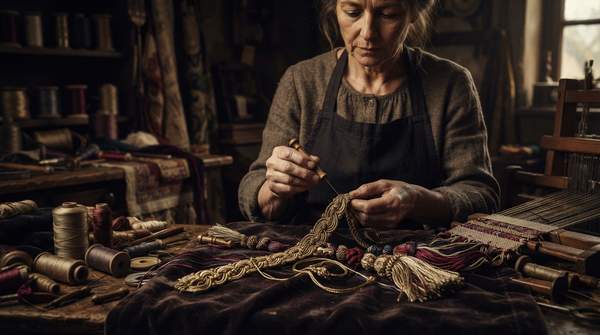
This substantial investment of time reveals the intrinsic artisanal value distinguishing indigenous luxury goods from mass production's expediency. The painstaking process, a hallmark of haute joaillerie and specialized textile work, illuminates the profound dedication to traditional techniques and the unparalleled quality defining each singular creation.
Adapting for Modernity: Craft's Evolution
| Textile Adaptation | Traditional Use | Modern Adaptation (2026) |
|---|---|---|
| Akwete Cloth | Heavy, ceremonial attire | Finer threads for versatile garments like tops, trousers, skirts, blouses, and gowns, optimized for comfort in warm climates |
Artisans are adapting Akwete cloth for modern garments, according to AllAfrica.
The dynamic evolution of traditional textiles, such as Akwete cloth, to accommodate modern comfort and stylistic preferences proves a critical adaptation for sustained contemporary market relevance. This strategic refinement allows indigenous crafts to maintain their allure for a discerning global clientele, ensuring their enduring presence within luxury fashion discourses.
Who Benefits, Who Struggles: The Market's Divide
Indigenous artists have actively fused traditional material palettes with contemporary design, incorporating precious elements such as 18-karat gold and rare corals into their work, as reported by Vogue. This innovative synthesis enables individual artisans to command elevated prices and achieve global acclaim within the luxury sphere, redefining 'indigenous craft' in a high-fashion context.
Conversely, the influx of imported textiles has weakened the market for indigenous weaving due to their significantly lower production cost and accelerated manufacturing timelines, according to AllAfrica. This bifurcation risks creating a 'star system': individual artistic adaptations, like Jack Tom's 'Dragonfly' using 14-karat gold and rare corals, flourish, while broader, community-sustaining traditional weaving industries remain acutely vulnerable to more affordable, mass-produced alternatives.
A Resurgent Future: The Trajectory of Indigenous Textiles
The global resurgence of indigenous African textiles offers a promising trajectory, contingent on continued innovation and strategic market integration.
- Indigenous African textiles are experiencing a global resurgence as designers increasingly incorporate traditional fabrics into contemporary fashion, according to Vanguard News.
This resurgence suggests a propitious future for indigenous textiles, provided they continue to innovate and meticulously carve their niche within contemporary design. This balances cherished heritage with the exigencies of a globalized market. The unwavering focus remains upon the maker's skilled hand and intricate processes, ensuring the intrinsic, enduring value of each creation.
The long-term vitality of indigenous craft traditions in the global luxury market will likely hinge on their ability to cultivate perceived exclusivity and artisanal value, if they successfully navigate the persistent pressures of mass production and champion broader community-sustaining methods beyond individual artistic acclaim.