Lyon's esteemed position as the "Silk Capital of the World" is a testament to centuries of dedicated craftsmanship, strategic royal patronage, and groundbreaking technical innovations. From its nascent beginnings in the 15th century, the city's silk industry evolved into a global powerhouse, renowned for producing luxurious and intricately patterned fabrics that adorned European royalty and influenced haute couture. This enduring legacy, shaped by pivotal advancements like the 'grande tire' and Jacquard looms, continues to define Lyon's cultural and economic identity, even as it navigates modern challenges.
Introduction: Lyon, The 'Silk Capital' Emerges
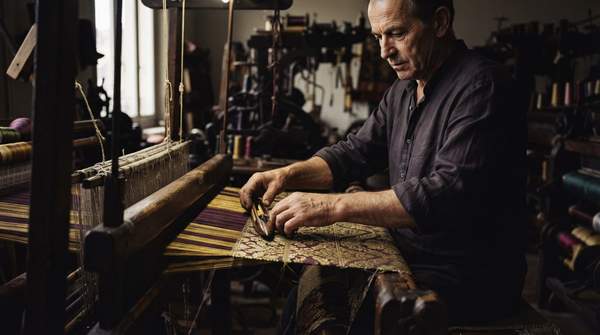
Lyon's association with silk weaving began in the 15th century, when Italian weavers settled in the Croix-Rousse district, bringing with them the expertise that would lay the foundation for the city's future prominence. This district, known as "the hill that works," became a bustling hub for silk weavers, or "Canuts," who developed intricate patterns unique to Lyon. The city's growing population and diverse industries further fueled demand, including significant orders from figures like Emperor Napoleon Bonaparte, solidifying Lyon's reputation as a major production center for the European silk industry.
While Lyon's involvement in silk production dates back to these early centuries, it was during the 18th and 19th centuries that the city truly earned its title as the "Silk Capital of the World." This period saw the flourishing of its silk industry, driven by pioneering techniques in weaving and dyeing that set its products apart in terms of quality and design.
Royal Patronage and Early Foundations (15th-17th Centuries)
The development of Lyon's silk industry is deeply intertwined with the support of French monarchs. King Charles VII, in the 15th century, granted Lyon the right to host tax-free fairs, facilitating the trade of Italian silks and establishing the city as an important European commercial center. This early groundwork was further built upon by King François I, who actively encouraged the settlement of the first Italian weavers in Lyon, granting them privileges for producing gold, silver, and silk fabrics. These incentives attracted skilled foreign workers, leading to rapid prosperity for the nascent industry.
However, this initial growth faced setbacks during the Wars of Religion, which saw merchants and manufacturers depart and workers migrate to competing Italian cities. High taxation on raw silk imports imposed by King Charles IX further diminished competitiveness, causing a decline in activity. The industry experienced a significant revival under King Henri IV, who championed the development of silkworm breeding, particularly in regions like Cévennes and Ardèche, ensuring a domestic supply of raw material. This royal support, alongside evolving techniques, was crucial for the industry's resurgence.
During the reign of King Louis XIV, the Lyonnais silk industry solidified its reputation for luxury. Jean-Baptiste Colbert, Louis XIV's minister, rigorously regulated the profession, establishing the "Lyon fabric" in 1667 to govern all aspects of weaving, from production quality to organizational models. Orders for opulent gold and silver brocades to furnish royal residences poured in, and Lyon merchants exported their innovations, tailored for the fashion of Versailles and Paris, across Europe. This period allowed Lyon to outpace Italian, English, and Dutch competitors, establishing its dominance in luxury silk production.
Technical Revolutions: The 'Grande Tire' and Jacquard Looms
Technical innovation played a transformative role in Lyon's ascent as the world's silk capital. A significant advancement came with Claude Dangon's improvement of the "grande tire" loom during the late 16th and early 17th centuries. This enhanced loom allowed for the production of wider and more intricate fabrics, expanding the creative possibilities for Lyonnais weavers and contributing to the industry's resurgence under Henri IV.
The most revolutionary innovation, however, arrived in the 18th century with Joseph Marie Jacquard's loom. This invention fundamentally changed silk production, enabling the creation of highly intricate and complex patterns with unprecedented efficiency. The Jacquard loom quickly replaced earlier draw looms, reinforcing Lyon's global position and establishing its reputation for exceptional quality and design. This technical revolution not only cemented Lyon's status as the world capital of silk but also inspired early principles of modern computing, highlighting silk's role beyond a luxury fabric to a driving force in industrial and economic development.
A Chronology of Lyon Silk Weaving
The evolution of Lyon's silk industry is marked by a series of royal interventions and technological breakthroughs, as detailed in the following chronology:
| Century/Period | Key Patron/Event | Innovation/Development | Impact |
|---|---|---|---|
| 15th Century | King Charles VII | Granted tax-free trade rights for Italian silks; Louis XI planned a national silk industry in Lyon. | These early efforts laid the groundwork for Lyon's future silk industry. |
| 16th Century | King François I, King Charles IX | François I supported Italian weavers' settlement; industry declined during Wars of Religion and due to high import duties. | Initial prosperity was interrupted by political instability and economic policies. |
| Late 16th / Early 17th Century | King Henri IV | Supported silkworm breeding; Claude Dangon improved the 'grande tire' loom. | Royal support and technical advancements were crucial for the industry's resurgence, enabling wider and more intricate fabrics. |
| 17th Century | Louis XIV, Colbert | Louis XIV made Lyonnais silks fashionable at Versailles; Colbert implemented regulations. | This period solidified Lyon's reputation for luxury silk, with exports throughout Europe. |
| 18th Century | Joseph Marie Jacquard | Jacquard's loom revolutionized silk production. | This innovation was a significant technical leap, allowing for highly intricate patterns and reinforcing Lyon's global position, also inspiring early computing principles. |
| 20th Century | Industrialization | Industrialization and synthetic textiles led to a decline in handloom weaving. | This era marked a shift from the traditional 'fabrique' system to modern factories, pushing some manufacturers to consolidate production. |
| Present Day | Ongoing preservation efforts | Remaining workshops, museums like the Maison des Canuts, and continued influence on luxury textile production. | Despite challenges, the artisanal craft and cultural significance persist. |
Challenges and Resilience in the Modern Era
The 20th century presented significant challenges to Lyon's traditional silk industry. Industrialization and the rise of synthetic textiles led to a decline in handloom weaving, impacting the traditional "Canuts" and their family-specialized craft. This period saw a shift from the decentralized "fabrique" system to more consolidated factory production, altering the landscape of the industry. Despite these transformations, the city's silk industry demonstrated resilience.
Some manufacturers adapted to the changing textile industry, ensuring continuity through decades of transformation. For instance, the Prelle house, a Lyon silk dynasty, maintained its operations through generations, even as the industry faced new pressures. While automatic silk loom production diminished the prevalence of traditional, family-passed techniques, the foundational contributions of these generations of weavers continue to underpin Lyon's silk heritage.
Lyon's Enduring Silk Legacy Today
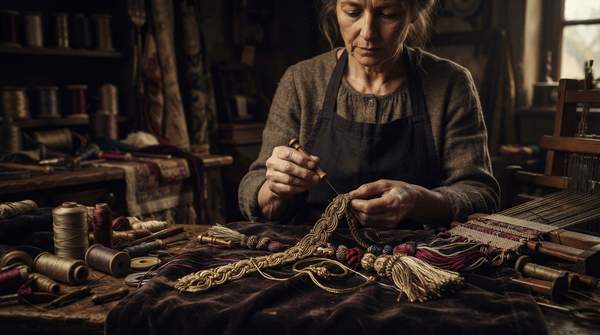
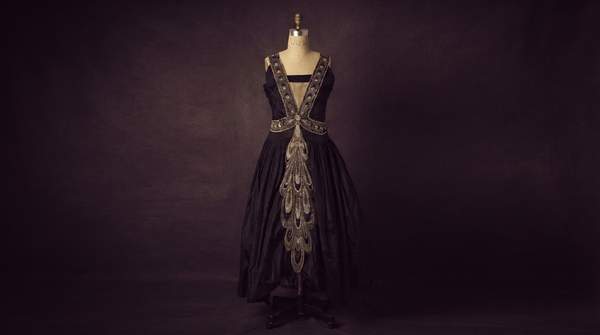
Despite the challenges of the 20th century, Lyon continues to uphold its rich silk heritage and craftsmanship, maintaining a significant presence in the luxury textile industry. A select number of prestigious workshops actively preserve this delicate art, blending traditional techniques with contemporary design. Among these emblematic houses are Maison Brochier Soieries, known for combining Lyonnaise tradition with modern art; Hermès, which produces exceptional fabrics for scarves and accessories; Tassinari & Chatel, specializing in historic fabrics for interior design and haute couture; and Prelle, one of the oldest silk houses globally, celebrated for its luxurious and historically inspired textiles.
These workshops not only produce fine fabrics but also serve as living testaments to Lyon's history. The city also offers various cultural sites dedicated to its silk heritage. The Musée Soieries Brochier provides insights into the expertise of a Lyon silk house, tracing its history and collaborations with haute couture. The Musée des Tissus et des Arts Décoratifs offers a journey through 4,500 years of textile history, while the Maison des Canuts allows visitors to explore the historic Croix-Rousse district and its living heritage, including opportunities to observe fabric printing and learn about textile creation. These institutions ensure that the artisanal craft and cultural significance of Lyon silk persist, connecting its storied past to the present day.
Preserving a Legacy: Lyon's Enduring Silk Craft
Lyon's historical significance as the 'Silk Capital of the World' is maintained through the continued operation of specialized workshops and dedicated museums, ensuring the preservation of its unique artisanal techniques and cultural heritage. The continued operation of historic silk workshops and the active engagement of visitors in Lyon's silk museums serve as measurable indicators of this enduring legacy.
Sources
- The history of Lyon through skills: Fashion Technology — WorldSkills Lyon 2024
- Histoire ancienne de la Soierie lyonnaise — Brochier Soieries
- Our history - Prelle
- Discover Lyon’s Silk Heritage — Brochier Soieries
- La Plus Belle Soie: The Enduring Influence of Silk Weavers in Lyon — The Lexington Line