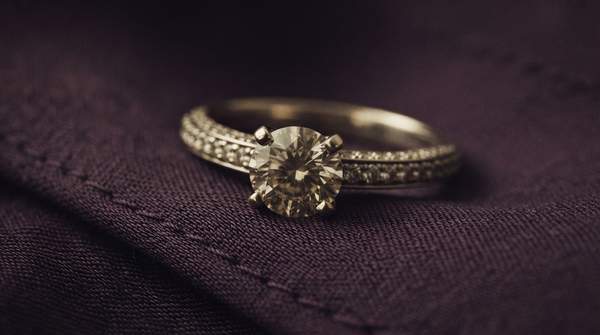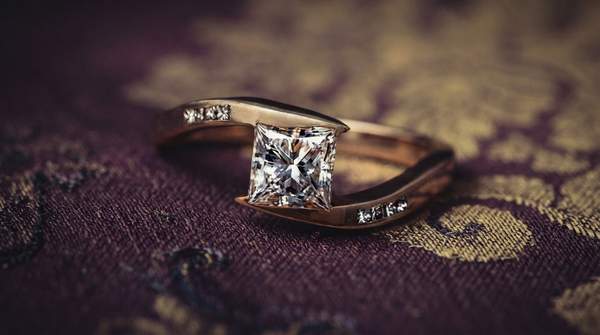
Advanced jewelry settings such as the tension and invisible mounting are feats of applied physics rather than ornament alone. A tension setting holds a gemstone with the compressive force of a hardened metal band gripping precision-cut grooves, producing a floating appearance with nothing beneath the stone. An invisible setting slips grooved stones into a hidden metal framework, creating a seamless carpet of gems. Both deliver dramatic visual effects, and both demand hard gemstones and exacting craftsmanship—but they differ sharply from a traditional prong setting in security, maintenance, and repairability.
The Engineering Marvel of the Tension Setting
Despite its name, the tension setting does not rely on a pulling force at all. As Oceanside Jewelers explains, the term is a misnomer: the setting actually works by compression, applying equal force on either side of the gemstone, often by spring-loading the band so its two ends rest at a touching position. The concept is famously associated with the Spannring, patented in 1979 by the German manufacturer Niessing. The result is a dramatic floating effect in which the stone appears suspended between the band's two ends, with little to no visible metal touching it.
According to Jewelers of America, the mechanism depends on precision-cut grooves that align with the stone's girdle and apply inward force from the ring's open ends. Nothing sits beneath the gem, which allows light to enter from every direction. Fascinating Diamonds describes these as structural designs requiring exact calculations, advanced metalworking, and extremely tight tolerances—among the most sophisticated settings in jewelry design.
Materials are equally critical. Jewelers of America notes that special alloys such as hardened white gold are commonly selected for their strength and resistance to flexing, and that specialized alloys or heat treatments may be used to maintain metal tension. Stacey Friant, writing for Ken Walker Jewelers, adds that gold—whether 14k or 18k—must be specially treated or alloyed to increase its spring force, while soft metals like sterling silver or 24k fine gold should never be used because they bend easily and can allow the stone to fall out. Naturally strong metals such as titanium and stainless steel, by contrast, do not require special alloying.