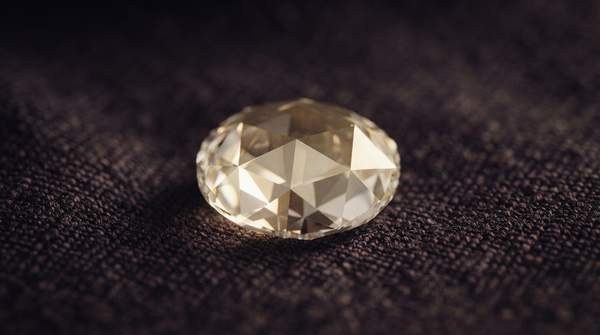
Every gemstone cut answers a question that most collectors never hear asked: what should light do when it enters the stone? The familiar modern brilliant is only one answer—scatter light into a million competing sparks. But the history of lapidary work contains other answers, born of other priorities. The flat-bottomed Rose Cut of the Georgian era let a stone glow softly in candlelight, while the modern Opposed Bar Cut arranges facets so that light returns as orderly geometric patterns, an effect its sellers compare to illuminated pixels. Understanding which philosophy a cutter pursued—preserving material, scattering light, or organizing it—gives a collector a richer evaluative framework than brilliance alone can provide.
From Weight to Light: A Historical Journey of Cutting Goals
The earliest split in gem cutting philosophy began as a matter of geography and priorities. As the Antique Jewelry University recounts, India was the only source of diamonds until the eighteenth century. Indian lapidaries refined diamonds to reveal geometry and preserve the stone’s natural integrity, often using manual cleaving to expose clean faces. They gave no attention toward shape, symmetry, or beauty of form. The raw crystal was too precious to sacrifice; the cutter worked with what nature had provided rather than imposing an ideal upon it.
The European cutters, whom the same history generally credits with making diamond cutting an art form, reversed that hierarchy. They strived for pleasing shape and improved light performance, an ambition that later led to the investigation of optical possibilities in earnest. Their intent, as the Plumb Club's history of gem cutting puts it, was to improve upon the potential of a diamond's physical, chemical, and optical properties—even when that meant sacrificing significant carat weight to achieve a deliberate form.
That European striving matured over centuries, but it met a practical ceiling. As late as the late Georgian and Victorian eras, cutters still could not always rely on the rough itself to deliver beauty. Surface treatments such as foiling, tinting, waxing, and mirroring were once common ways to enhance a stone's appearance, and jewelry bearing them survives mostly from those periods. The Antique Jewelry University notes that this practice came to a halt at the dawn of the twentieth century, when the discovery of South African diamond mines in the late 1800s made larger and better-quality diamonds available.
Combined with new cutting techniques and better knowledge of gemstone optics, there was hardly any need for such surface treatments anymore. The lesson for the collector is plain: the appearance of an antique stone is inseparable from the tools, rough, and lighting conditions of its era.
The Rose Cut: Mastering the Subtle Glow
The Rose Cut is the clearest surviving expression of what a cutter could achieve before the modern understanding of light return took hold. Its structure is elemental: a flat base beneath a domed crown covered in triangular facets that rise to a central apex. There is no pavilion beneath the girdle to catch light and throw it back to the eye—a defining feature it shares with other early cuts and one that shapes everything about how it looks in wear.
What that geometry produces is not brilliance in the modern sense but something gentler and more atmospheric. With a flat bottom and no deep pavilion, the Rose Cut cannot trap light and return it in concentrated flashes. Instead, its faceted dome plays across the surface of the stone, reflecting ambient light in a soft, diffused shimmer. In the candlelit interiors for which it was made, that quality read as size, warmth, and depth rather than as sparkle. A stone cut this way can look larger than its carat weight because the entire diameter sits at the viewing surface, with nothing sacrificed to depth.
This is why the Antique Jewelry University's account of the era's surface enhancements is so relevant to understanding the Rose Cut's world. Cutters of the period worked with what they had, employing great skill to transform otherwise not-so-desirable gemstones into jewelry fit for Kings and Popes—sometimes with the help of foil backs that could be ruined by wear. The Rose Cut belongs to that same economy of scarcity: a design that coaxed maximum presence from imperfect rough and dim light. Judged by modern brilliance standards it inevitably falls short; judged by its own intent, it succeeds completely.
The Opposed Bar Cut: Organizing Light for Modern Patterns
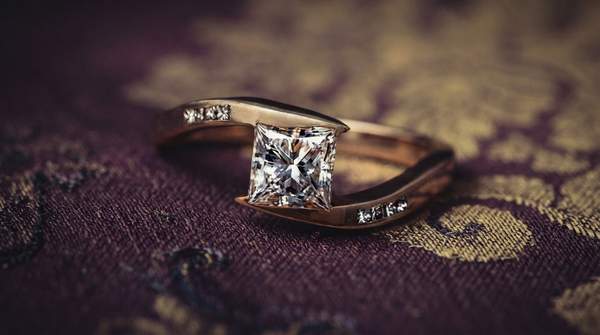
If the Rose Cut represents the historical art of accepting light as it comes, the Opposed Bar Cut represents its contemporary opposite: precise, deliberate control. This modern step cut, also marketed as the Pixel Cut, is described by Moriartys Gem Art as a distinctive alternative to traditional gemstone cuts, known for striking geometric patterns, intricate faceting, and mesmerizing optical effects. Its carefully arranged facets create patterns of light and color that can resemble rows of tiny pixels or illuminated geometric shapes.
The mechanism is conceptual cousins to the step cut, though carried further. Where a brilliant cut scatters light—sending it into countless overlapping directions so the stone reads as a single scintillating mass—the opposed bar arrangement imposes order. Long rectangular facets set against one another act as parallel mirrors, bouncing light back and forth in disciplined corridors rather than scattering it. The result is not a stone that sparkles more, but a stone that composes: the eye does not find a blur of white flashes, it finds pattern, rhythm, and structure.
The vendor's description of these precision-cut gems, offered in materials such as golden heliodor, frames the effect as rows of tiny pixels or illuminated geometric shapes. It is worth attributing this language carefully: it is a seller's characterization of the cut's optical signature, and one practitioner community post likened the effect to moving, two-dimensional digital pixels—an evocative but informal description rather than a gemological measurement. What is not in dispute is the cut's underlying intent, which is the direct opposite of light scattering: the facets are arranged so that light returns to the eye as organized structure rather than as diffuse sparkle.
Understanding Gem Cutting Philosophies
To make this comparison concrete, the table below categorizes the major cutting approaches by their intended optical outcome rather than by period or shape alone. The analytical operation is simple: for any stone you encounter, ask what the cutter wanted light to do—be preserved, be scattered, or be organized—and the gem's appearance becomes legible as intent rather than as a deviation from a single brilliance standard.
| Example | Cutting Philosophy | Primary Optical Goal | Light Handling Method |
|---|---|---|---|
| Ancient Indian cutting | Preserve the rough | Retain as much of the original crystal as possible | Polished existing crystal faces; extra facets added only to conceal flaws, with no attention to shape or symmetry |
| Early European cutting | Shape for light | Pleasing form and improved light performance | Deliberate facet arrangements that sacrifice weight to exploit the stone's optical properties |
| Rose Cut | Diffuse glow | Maximize apparent size and color in candlelight; a soft, subtle shimmer | Flat base and domed top of triangular facets meeting at a central apex; reflects ambient light rather than returning it in concentrated flashes |
| Opposed Bar (Pixel) Cut | Organize light | Create visual pattern rather than sparkle | Carefully arranged opposing bar facets that return light as geometric patterns, described by sellers as resembling tiny pixels |
Read across the rows, the table traces an evolution in what cutters asked of light: first to be conserved, then to be performed, then to be scattered into brilliance, and now—in the opposed bar tradition—to be marshaled into pattern. No row is a lesser version of another; each represents a distinct answer to the same material question.
Two Philosophies, Distinctive Beauty
The deeper point this history makes is that brilliance is a convention, not a law of nature. The Antique Jewelry University observes that the beauty of a gemstone is perceived by the wearer mostly from the quality and quantity of the light returned from the gem to the eye—but that observation cuts both ways. It describes what light does, not what light must do. A Rose Cut returns light thinly and softly; a brilliant returns it densely and sharply; an opposed bar cut returns it in ordered ranks. Each is a complete optical statement.
For the collector, this reframing dissolves a common evaluative error. An antique rose-cut diamond that looks quiet beside a modern round brilliant is not a failed brilliant—it is a fully realized expression of a different goal, engineered for different lighting and different values about material conservation. Likewise, a modern pixel cut that scintillates less than a brilliant of equal size is not technically inferior; it is pursuing a visual logic in which pattern, not sparkle, is the payoff. The craft in both cases is immense, and in both cases the craft is aimed somewhere other than where the standard comparison assumes.
There are honest limits to this framework. It is conceptual, aimed at a collector's appreciation rather than a gemologist's measurements; it offers no valuation guidance and no catalogue of every historical cut. What it offers instead is a habit of seeing: reading a stone's facets as choices rather than defaults.
Appreciating the Cutter's Intent
The practical decision this framework supports is straightforward: collectors should evaluate gemstones by understanding the specific optical philosophy and technical mastery behind each cut, rather than solely by brilliance. A stone's sparkle—or its deliberate absence of sparkle—is evidence of intent, and intent is what separates a cut worth studying from a cut worth only weighing.
The measurable indicator is one any collector can apply immediately: the ability to articulate the intended light interaction of a gem's cut—whether a diffused glow, as with the Rose Cut's faceted dome over a flat base; scattered sparkle, as with the modern brilliant; or an organized pattern, as with the Opposed Bar Cut's carefully arranged facets. A stone you can describe in those terms is a stone you can genuinely evaluate—and the next time you encounter an unfamiliar cut, that single question, what was this cutter asking light to do?, will open more understanding than any brilliance grade.
Sources
- A History of Diamond Cutting — Antique Jewelry University
- Cut by Time: A History of Gemstone Shapes, Technology, and Jewelry Trends — The North Way Studio
- The History of Gem Cutting - The Plumb Club
- Gemstone Surface Enhancements — Antique Jewelry University
- Opposed Bar / Pixel Cut Gemstones — Moriartys Gem Art